THE TRUTH
about this old parody song of Bob River’s
is that we dare say or even try to convince ourselves
that there are
JUST
12 Pains of Christmas. . .

Whatever other
P A I N
you may put on the list. . .
here’s hoping
EVEN NOW
(TEN DAYS AWAY FROM CHRISTMAS)
The Season
will give more than it promises
and whatever’s
e x P Ect e d

A POWERFULLY PROFANE PRAYER
Anthony Hopkins might be one of the best actors in the past 50 years and one of the reasons I personally love and admire him is because he says his lines almost as if they were your own thoughts, and a flawless double-take.
B U T
Here’s the problem with his film clip. . .Most of us either got disgusted or we stopped watching or maybe we even haven’t gotten this far when we heard those
TWO WORDS that start with an F and end with a T. . .DID you hear what he said after that. . .You see what makes that prayer so powerful isn’t the words, it’s a REELEASE, A SURRENDER that powerfully were related, actually felt, in those words. When’s the last time you had that kind of surrender, felt that kind of release that you offered it or felt it or just flat out better still, that you actually lived it. . .
Uhhhhhhhhhhhhhhhhhhhhh. . .
maybe it’s not the most powerful and the fastest prayer in the world
or maybe it’s just one that’s long been waiting to be
PROFANELY PRAYED
MY SAVIOR COMPLEX
DO UNTO OTHERS AS YOU’D LIKE TO BE DONE UNTO YOU. . .RIGHT
Or better,
DO UNTO OTHERS AS THEY REALLY WANT DONE UNTO THEM. . .
I mean these are really great aspirations for yourself
FOR OTHERS
. . .or are they the worst?
it’s real close to liking you to break open the
Butterfly Cocoon
before it’s ready
. . .seemingly to make it easier
But actually doing it the most harm ever. . .
THE SAVIOR COMPLEX
I’ve always had one
and thought it noble
and even sometimes wore it as a
Badge of Honor
until I saw I was actually doing more harm
than any kind of well intended
G O O D
so when an article about SAVIOR COMPLEXING comes across my attention
I SOAK IT UP
and ok, fine, here’s the truest of true Confessions:
I end up making this Complex even more
C O M P L E X I N G
and yet, I read on and invite you to do the same now with this article from a recent Psychology Today by Mark Travers, Ph.D., an American psychologist with degrees from Cornell University and the University of Colorado Boulder.

3 Ways to Control the Urge to Save
Everyone. . .
Dr. Travers shares that many people come to therapy troubled by their inability to help someone in need. They may say things like:
- “Why do I always feel attracted to people who have had lots of troubles in life?”
- “I make every sacrifice possible to help him, but he still doesn’t change.”
- “If I’m constantly trying to change my significant other for the better, does that mean I’m not accepting of them?”
If you relate to any of these questions, you may have a savior complex. At first glance, your behaviors might point to your helpful nature. But, when examined more closely, your savior complex can be psychologically unhealthy as it can give you an external outlet to focus on instead of addressing your own problems.
Helpfulness is a valued and pro-social trait, but there is a difference between helping and saving. A savior complex goes beyond our ability to help people, crossing into the realm of trying to be a hero in someone else’s life for your benefit more than theirs.
Here I’ll talk about three ways you can manage your instinct to want to “save” people.
1. Practice active listening
When people confide in you, they are often looking for an outlet to let out pent-up emotions instead of wanting to “be fixed.” A big problem for many “saviors” is the mistaken assumption that people are incapable of solving their own issues. If you take up the practice of listening more actively, you may learn that this person is perhaps just looking for a supportive shoulder and someone who will listen.
A study published in the Journal of Positive Psychology finds that listening carefully and attentively increases the level of humility in any conversation, resulting in a positive feedback loop of increased humility and better listening.
Here are two ways to up your listening skills, according to the researchers:
- Don’t be afraid of silence. Silent moments are essential for building a good conversation. Allow yourself to be silent to enable the other person to speak. For instance, when a friend comes to you with a problem, aim to understand rather than immediately reply. Instead, watch for their body language, which speaks volumes (e.g., tensed shoulders may express fear or hesitation).
- Believe in the benefits of listening. Familiarize yourself with the benefits of listening. This will motivate you to become a better listener.
2. Wait it out before stepping in
Aside from practicing active listening, resist your urge to intervene. You may find that people can often come to their own aid when helping themselves is the only real way out.
If you try to be the fixer of all their problems, you run the risk of unintentionally pushing them towards a sense of learned helplessness, where they lose the perspective to be able to diagnose and address their own issues.
When a loved one comes to you with an issue, refrain from offering assistance or suggestions right off the bat. Remind yourself that you can be present for someone without having to rescue them. Instead, you can offer validation that shows that you understand and empathize with them and are there for them whenever they need to vent.
3. Hold in your urge to help until you are asked for it
One key aspect of the savior complex is the ingrained desire to help even when it’s not wanted or requested. Assuming that the other person is incapable of helping themselves may reflect or be perceived as a superiority complex on your end.
Instead, you can offer assistance in low-pressure ways that keeps the ball in their court. For instance, ask the other person questions like, “This situation seems quite tough. Is there any way I can help?”
Follow their guidance if they ask you to help in a certain way instead of assuming that you know what’s best.
Now READING and Article and even remotely trying to implement it makes not an expert but. . .
It’s a beginning (a g a i n)
Managing your savior instincts may seem difficult at first, but it’s a learnable skill. Even though you may believe you are doing someone a favor, saving someone who doesn’t want to be saved may backfire. Wait until this person asks for your assistance since it’s likely that someone who truly needs it will ask you for it directly.
And remember
Even as you’re Reaching Out
To REACH IN
f i r s t
IS THIS HELPING THEM
MORE THAN
APPEASING ME. . . ?

ETHICALLY SPEAKING
THERE IS ALWAYS MUCH TO BE SAID
. . .especially when it comes from what we think but can’t always express, but when it comes to
ETHICALLY SPEAKING
maybe
ACTIONS SPEAK LOUDER THAN WORDS
(as they should)
when the question comes up
Are You as Ethical as You Think You Are?
Our moral decisions can be swayed by our feelings and our environments. Here are three ways to become a better person.
Let’s imagine that you come to our lab at Northwestern University to do a task. You have sets of numbers in front of you, and you are asked to find the two numbers that add up to exactly 10 for each set. For each correct response, you earn 50 cents.

Now, imagine that we tell you that you can score yourself, and then recycle the paper with your responses, which doesn’t have your name on it. All you have to do is turn in a payment slip with your score, and we pay you.
Would you cheat?
When we conducted these types of studies, after participants left, my research assistant actually dug through the recycling and scored everyone. And we often found that everybody basically cheats a little and earns $2 to $3 extra.
Hmmmmmmmmmmmmmmmmmmm. . .
Decades of research point to moral fallibility, that humans are not perfect and are likely to fail in being moral. Everyday people end up violating their own moral values, sometimes unknowingly, and they find numerous ways to rationalize or ignore this behavior. By doing so, they keep their image of themselves as good, honest individuals—so good that the average person thinks they’re more likely to go to heaven than Mother Teresa.
Is there anything to be done about this? First, we need to be aware of all the subtle ways that our moral decisions can be swayed. Then, we can put safeguards in place so we can make better decisions over time—and become better people.
What influences our ethical decisions?
Moral decisions don’t simply come down to a conscious choice to cheat or not. Research has found that certain things consistently influence our choices—whether it’s how we’re feeling or what time of day it is.
In one study, we gave participants the numbers task to complete while listening to anxiety-inducing music from the movie Psycho. In that situation, people are even more likely to exaggerate their performance.
What’s the explanation? Our data suggest that anxiety increases people’s perception of threat, which in turn results in self-interested, unethical behavior. In threatening situations, our brain shifts into a state that facilitates rapid defense mechanisms; our cognitive resources are temporarily diverted so we can quickly respond to the situation and protect ourselves. Because of these self-protective impulses, we are more likely to narrowly focus on our own basic needs and self-interest, rather than being more mindful of ethical principles.
Another factor that matters is time of day. In one study, half of our participants were randomly assigned to do a task in the morning, 8 a.m. to 12 p.m. The other half did it between 2 to 6 p.m. in the afternoon. In this case, we saw more cheating in the afternoon.
This is evidence for people’s inability to regulate their behavior in a tempting situation. The mere experience of everyday living—making decisions, expending physical energy—can reduce our ability to exert self-control as the day progresses. As we become more tired, our morality is compromised.
We’re also heavily influenced by the way people around us behave. We learn vicariously from our peers, our groups, and our leaders. Workplaces can intentionally or unintentionally normalize unethical behavior, which leads to collective corruption. For example, in one paper we showed that the language used by corporations reflects their culture and shapes employees’ behaviors. Specifically, we found that corrupt companies use linguistic obfuscation (language that is difficult to understand) in their values statement, and as a result team members cheat more.
There is other research pointing to even more factors that affect our moral decisions. For example, if people have ambitious goals or have performance pressures, they are more likely to engage in everyday dishonest behavior. These subtle situational forces can swing our moral compass.
Importantly, we often don’t realize the impact of these factors. If I asked you whether you’re more likely to be unethical in the morning or afternoon, you probably wouldn’t think it makes a difference.
In some ways, our brains may be concealing our own dishonesty from us. In another one of my studies, participants who engaged in a task where they had the opportunity to cheat had a much weaker memory of the experience—when and where it happened, how they felt—compared to those who completed a task without the possibility of cheating. This forgetting seems to be one of the psychological tricks that enable us to engage in questionable behavior over time.
Three steps to moral growth
Based on Maryam’s research, here are some guidelines to help you make more moral decisions and continue growing and learning as an ethical person.
1. Plan for ethical challenges. Since other people play a significant role in our morality, one place to start is to find an ethics mentor. You can seek guidance from someone inside or outside your organization, someone trustworthy to discuss ethical issues with.
Next, you can also manage other people’s expectations of you—whether directly or indirectly. For example, in one of my studies, participants were less likely to ask someone to lie after receiving an email from them with a moral quotation in the signature (something like “Success without honor is worse than fraud”).
Even just including that type of quotation in your email signature is a type of safeguard, so you are less likely to be asked to do something questionable. In this way, showing your character can help stop moral dilemmas from even arising.
2. Bring awareness to a moral challenge in the moment. There is a lot of evidence of “moral fading,” where we simply don’t pay attention to the moral implications of our decisions. When dilemmas do arise, we have to explicitly look for these moral implications and not narrowly focus on the costs for ourselves. For example, you may be choosing between two products and one might be cheaper, but at the same time you have information that the company is using questionable labor practices. Do you take that into consideration? Do you think about the harm in this context?
Another key is avoiding rationalization. We can be very creative in justifying questionable behavior when there is self-interest involved. We might tell ourselves, “Oh, everyone does this, I’m just following orders, I’m doing this for the greater good, it’s their own fault, they deserve it.”
If you’re aware of these tendencies, you can try three tests to avoid self-deceptive rationalization:
- The publicity test: How would you feel about your local newspaper publishing your choice and your thought process on the front page?
- The generalizability test: How would you feel about everyone acting in this way?
- The mirror test: If you look in the mirror after making the decision, would you be happy with yourself?
Finally, not rushing the decision is important. In a classic study, Princeton Theological Seminary students were less likely to help a stranger who was lying slumped on the ground when they were facing time pressure to go and deliver a lecture.
The traditional advice for making a decision is to sleep on it—and that is helpful to encourage you to think about decisions more carefully. If possible, you can also consult your company’s organizational policies by reading codes of conduct or calling a hotline.
3. Use reflection to learn from moral challenges. To be ethical doesn’t mean being perfect all the time, but it does mean being dedicated to learning. When you make a mistake, you can reflect in order to learn and do better in the future. To adopt an ethical learning orientation, ask yourself, “What can I do to be a better person?”
Sometimes, the problem is that we treat work as a completely separate realm of life. My research suggests that our tendency to separate personal and professional life—what is called “identity segmentation”—leads us to engage in more questionable behavior because we use a different code of conduct at work and at home. When people have an integrated identity across their professional and personal life, that leads to a sense of authenticity and more ethical decisions.
You can also learn by seeking more feedback and getting input on your moral decisions. This is particularly important because at work, managers tend to give much more feedback on performance mistakes rather than moral lapses. And we’re less likely to ask for feedback about our own ethics at work.
Ultimately, we may also have to assess whether our work is a moral fit. Is this the type of organization or job that is a good fit for you? Is this the industry you want to be part of?
I like to think about work as a “moral laboratory.” At its best, it provides opportunities for you to learn and grow in your job, and become your better self.
So. . .
maybe it’s truly not so much what you say or think. . .
WHAT SHOW YOU
(ethically speaking)
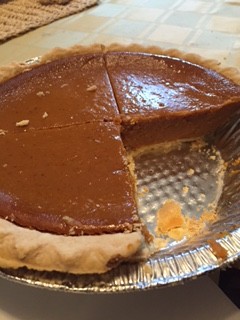
HUMBLE PIE
HUMBLE PIE
is the one pie dish
that should always be empty
b u t. . .
maybe you seriously need to ask:
How Do You Know If You Are Actually Humble?
much like Tyrone Sgambati, syndicated from Greater Good, recently asked and wanted us to consider. . .
The old joke about humility—that “it’s my greatest quality”—speaks to the difficulty in knowing how humble you actually are. It’s a paradox: If you’re walking around thinking you’re humbler than most people, then chances are good that you’re not. . .and you may well be sporty some of those crumbs from your ginormous piece of HUMBLE PIE
For precisely that reason, a trait like humility presents special problems in measurement for scientists and lay people alike. Even so, there are ways for you to try to understand how intellectually humble you are—and to cultivate this quality within yourself.
The trouble with measuring humility
Despite intellectual humility being the subject of intense scientific study in recent years, there remains debate among scientists on how best to measure it. That debate begins with a basic question: What is intellectual humility? Most scientists agree that being aware of your intellectual limitations and the fallibility of your beliefs is an important part of intellectual humility, but beyond that there isn’t a clear consensus. Some argue that intellectual humility ends there, while others suggest that things like how we view others’ ideas and how we express our beliefs are components of intellectual humility.
Most recently, a study published in the Journal of Personality Assessment reviewed the existing theories and measures of intellectual humility and proposed that there are two key dimensions: the self-directed vs. other-directed dimension and the internal vs. expressed dimension.
Both internal and expressed intellectual humility can concern either one’s own intellect and beliefs (self-directed) or those of others (other-directed), but internal intellectual humility is limited to an individual’s thoughts and opinions, whereas expressed intellectual humility captures how they act.
The differences between internal and external intellectual humility have important implications for how we detect humility in ourselves. While expressed intellectual humility, which consists of actions, can be detected by any observer, say a friend or a partner, your own internal humility is only accessible to one person: you!
Which means if you’re reading this article because you want to know if you are intellectually humble, you’re in a bit of a pickle. You could start by asking yourself one of the questions that researchers ask study participants: Do you “question your own opinions, positions, and viewpoints because they could be wrong?” But now you (and scientists who ask these questions) are faced with a problem: Are individuals really well-equipped to accurately assess their own intellectual humility?
The trouble is that humans are prone to many biases and blind spots that can make accurate self-assessment difficult. In fact, because we show a preference for positive emotions over negative ones, we are motivated to “self-enhance,” or view ourselves more favorably than we really are.
For example, decades of research on these kinds of biases demonstrate that individuals robustly and systematically rate themselves as higher than average on desirable traits like “intelligent” and “friendly” and lower than average on undesirable traits like “vain” and “dishonest.”
Unfortunately, there is no magic solution to this problem, and scientists themselves primarily use self-report questionnaires to assess intellectual humility. However, there is good news! Several measurement validation studies have shown that in spite of these biases, self-reports of intellectual humility are linked to patterns of behaviors and other attitudes that are consistent with the concept of intellectual humility. That doesn’t mean that individuals can perfectly assess their own intellectual humility, but it does suggest that self-reflection is informative.
Just be sure to remain mindful of the human tendency to self-enhance!
Discovering your own intellectual humility
Here are four different types of intellectual humility to look for in yourself—and some tips on how you might cultivate each one.
Remember the paper, discussed above, that proposed two dimensions of intellectual humility: internal vs. external and self-directed vs. other-directed? Together, the authors suggest that these dimensions create four types of intellectual humility. You can use them as a framework for assessing your capacity to be intellectually humble.
Internal and self-directed intellectual humility. This one requires you to inquire, honestly, about yourself. For example, when you have an opinion, are you open to changing it? Do you ever think about whether the reasons you have for a certain belief might be wrong? Do you calibrate the strength of your beliefs to the strength of your evidence? As answers begin to come to mind, make sure to take a moment and examine them for any biased thinking. Did they stand up to the scrutiny or was there some self-enhancement baked into your intuitions?
For readers who want to improve this kind of intellectual humility, making a habit of awareness is a great first step. Try checking in on your beliefs and opinions periodically, especially those that are important to you. Pay attention to the strength of the evidence supporting those beliefs, whether you ever question them, and how open you are to changing your mind. Just the very act of checking in constitutes intellectual humility, but doing it will also help you recognize where you might be falling short.
Internal and other-directed intellectual humility. This type of internal intellectual humility concerns thoughts and awareness regarding others. Once again, you’ll have to do some self-reflection, and one common place to start is asking yourself whether you recognize the intellectual merit in opinions and beliefs that are different from your own.
Before answering, it’s important to acknowledge the breadth of this question. It might be easy to recognize the merit in a friend’s opinion about a new movie, but very difficult to see merit in why someone voted for a political candidate you dislike. In fact, research has shown that when we perceive a discussion as a disagreement or when we perceive our discussion partner as immoral, we are less likely to be intellectually humble.
Often, we jump to conclusions about other people and their beliefs, even with incomplete information. We tend to judge books by their proverbial covers. This is exactly where an intellectually humble individual will withhold strong judgments, precisely because evidence is limited as long as you haven’t “read” the book. For instance, hearing that someone voted for your least favorite political candidate might elicit a negative knee-jerk reaction. However, you may not know how they arrived at their decision or the quality of evidence that led them there. If you find yourself in this situation, be curious! Understand the entirety of the picture—both your side and theirs—before making a judgment.
At the end of the day, it’s possible that you still disagree with their voting choice—and that’s OK. This type of intellectually humility is not about changing your opinion to accommodate others; it’s about fairly evaluating others and their beliefs.
Expressed and self-directed intellectual humility. Expressed and self-directed intellectual humility captures whether you behave in a way that is consistent with internal intellectual humility about your own beliefs and attitudes. Some common examples of this kind of intellectual humility are actively searching for both confirmatory and disconfirmatory evidence and being willing to outwardly admit when you are wrong.
Now, you can of course begin by asking yourself how much you do these things, but for the expressed form of intellectual humility, you can also look to those around you to help determine how humble you are. Doing both, asking yourself and others, will likely give you a more accurate picture of how intellectually humble your actions really are.
Most people have at one point or another realized that they were wrong about something—but then couldn’t bring themselves to admit it. Boiled down, this is a disconnect between internal and external intellectual humility. Even armed with the knowledge that you were wrong, you put up a fight to “save face.” Although that response might feel instinctual, the research suggests that it’s those who are perceived as intellectually humble and admit being wrong who are viewed more favorably by their peers. So, when you are wrong, just admit it!
Expressed and other-directed intellectual humility. This kind of intellectual humility arises perhaps most frequently in the midst of conflict, and involves expressions of intellectual humility toward others’ beliefs and attitudes. When you and your spouse (or maybe a close friend) disagree, how do you approach their perspective? Are you willing to hear it out in good faith, or do you insist they must have it all wrong?
Even the best of us can get sucked into the latter, but it’s a textbook example of intellectual arrogance. This type of intellectual humility can also arise in the context of feedback. It’s easy to discount critical feedback on the grounds that you “know better.” However, in doing so not only are you suggesting that your ideas are superior to your critic’s, but you may also be missing out on valuable insights that lie in your blind spots.
This is the perfect type of intellectual humility to check in with those closest to you about. Ask them if they feel heard in conflict, if you convey yourself in a way that suggests you think your opinions are superior to theirs, and how you receive feedback. If the answer surprises you, that’s just one more reason to work on being intellectually humble.
Knowing how intellectually humble you are isn’t an easy task, and being intellectually humble itself isn’t any easier! At the heart of these difficulties lie human characteristics and biases that we all share: We self-enhance, we’re prone to defensiveness in disagreements, we judge books by their covers, and the list goes on. Yet, the science tells us that fostering these four aspects of intellectual humility can help you learn new things, improve your relationships, and create a less divided world.
If you’d like to dig deeper and take a science-based quiz assessing your intellectual humility, please visit the new Greater Good intellectual humility quiz!
and see exactly what it does for the Caring Catalyst humbly residing within YOU. . .
Uhhhhhhhhhh now about that piece of pie. . .
BROKEN BUT NOT SHATTERED
Have you ever needed something
And never knew it
Until you got it?
We both parked at the same time
We both got out of our cars at the same time
We both walked up towards the building at the same time
I hadn’t seen her in years
. . .I didn’t even know she still was with the agency
And THERE she was. . .
Tearful,
Heart-heavy-burdened down
Not just with her computer and nursing bag
Wheeling behind her
Tears
We stopped and hugged
Right there in a middle of
A M O M E N T
There she was
There I was
Unplanned
Unscripted
Yet perfectly scene’d
In a backdrop of a cloudy sky
That dropped over the Lake
B R U I S E D
B E A T EN
From a storm
Far away
And yet not quite here,
Y e t
And the Best news of all—
S H E L T E R
Secured
Safe
Comforting
Assuring
Was in place
And like most times—
Not just seen
Not just recognized
Not just experienced
Until the most absolute
m o m e n t
Looking back. . .
R e f l e c t I n g
(without a mirror)
I’m a little offended now
G a l l e d
That she felt/believed
I was actually there for her. . .
For her vulnerability
For her tears
For her undressed,
fully naked,
stripped down,
Exposed honesty
And truth. . .
Which SHOWED ME
What I so-
All-the-time-behind-the-curtain-triple-locked-door-of-my-heart
Never-always-so-guarded-very-afraid-FEAR-to-show
. . .W H O was there for W H O. . .
At this early
So very CHANCE
(NOT-AN-ACCIDENT)
Maybe-to-never-happen-again-ever-the-same-way-
M O M E N T ?
Me for her?
Her for me?
The simple answer is a resounding
Y E S
As we hugged
Right there
Right then
I realized that what’s Broken
Seldom is S H A T T E R E D. . .
That often
Maybe more usual than we notice
We get tired
We get disappointed
We’re disillusioned
That
Caring
Compassion
Loving
Giving
Sharing
Accepting
Forgiving
Will get you hurt
. . .hurt really bad
Make you wounded
Get you bloodied
E M P T I E D
D E P L E T E D
E X H A U S T E D
. . .it’s a paycheck
Not deposited
When needed/expected
An Emotional Withdrawal
That can only be replenished with:
G O F I G U R E :
Caring
Compassion
Loving
Giving
Sharing
Accepting
Forgiving
Hey. . .
Have you ever needed something
And never knew it until
You G O T I T ?
G E T I T
and oh my. . .
how the clouds part
A LYING CARING CATALYST?
Liar, liar pants on fire. . .
No one wants to get caught in a lie and appear to be dishonest or deceptive. But does telling a lie actually make you either of those things?
THE ULTIMATE TRUE OR FALSE:
Is there anything
C A R I N G C A T A L Y S T
a b o u t T H A T. . .
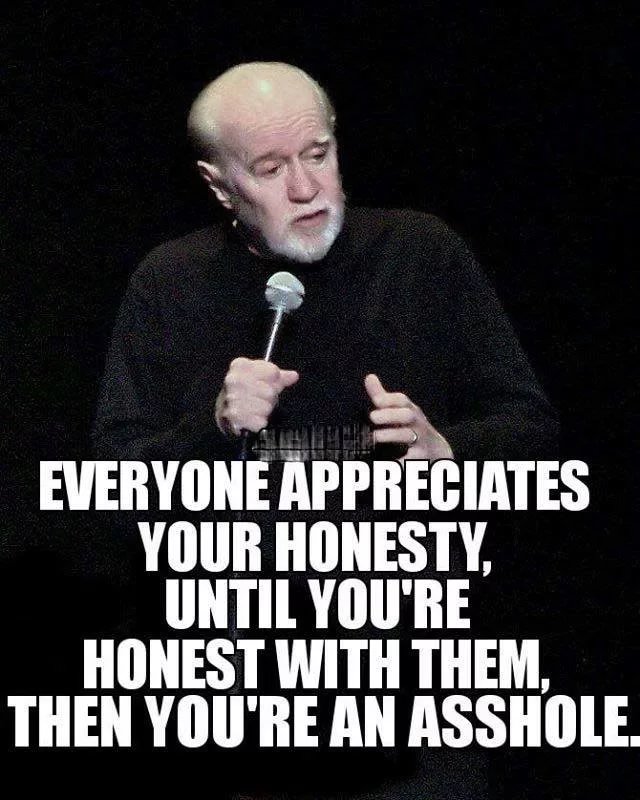
The truth is, there are some advantages to lying; and they aren’t always for self-gain. Sometimes people choose to lie to protect others and spare their feelings. Because let’s face it, the truth hurts.

Why do we even lie?
We all need to take a moment to be honest with ourselves and admit that we all lie. It is in our innate nature to deceive and sometimes protect.
Yes, we sometimes tell lies to cover up bad behavior, manipulate others, or rise to power and attain what we want.
But we also lie to spare the feelings of others, avoid unnecessary conflict, or to simply brighten up someone’s day.
Dishonesty is in our nature.
Researchers believe that the act of lying came into play after the development of language. It is the evolution of deceptive strategy, just as animals use camouflage to deceive their predators or prey.
In terms of efficiency, lying is the easiest way to rise to power and attain resources. If your enemy is larger and stronger than you, then physical force will not be very effective. But if you are able to outwit and manipulate your enemy; not only can you acquire their resources, but make them believe that it was their idea own idea.
How often do we lie?
This of course is relative to the individual. The frequency of lying was first documented by social psychologist Bella DePaulo.
She asked 147 individuals to record their blips of dishonesty throughout the day. On average, her subjects lied at least twice a day. The lies themselves were relatively harmless in nature; innocuous excuses for instances such as lateness. Or fibs that present a false image; saying that you ran 5 miles instead of the truthful 2.
We’ve been fibbing since we learned to talk.
In actuality, we are conditioned to lie at a young age. Didn’t your parents tell you to always thank your host for that “delicious” meal that you had to choke down? Social graces aside, it’s still a lie.
Children typically learn to lie between the ages of 2-5. Kang Lee, a psychologist from the University of Toronto studied children between the ages of 2-8 to gauge the kind of lies that children tell.
When children first begin to lie at the age of 2, it is an indication that they are starting to test out their independence. They lie simply to see what they can get away with.
By the age of 8, the children actually have the capacity of lying to spare the feelings of others. The results of the study actually found that these lies are motivated by empathy and compassion rather than deceit and manipulation.

Lying is a reflection of our goals.
Sometimes you don’t even need to open your mouth to tell a lie. A simple facial expression is enough to convey a mistruth.
Embellishments, exaggerations, these are the close counterparts to outright lies. But in this case, these lies are almost never malicious. But in fact, a projection of one’s aspirations.
In an experiment conducted by Robert Feldman, he questioned a number of students about their grades and efforts in school. Most of them were dishonest about their actual grades. But instead of becoming anxious as most people do amidst a lie, they became incredibly engaged and excited to boast about their achievements.
“We lie if honesty won’t work”- Tim Levine
Is there a difference between moral and immoral lying? If we’re being honest with ourselves, the answer is a resounding yes. Some lies are well intentioned- meant to protect those who are being lied to.
Lying has even been found to have psychological benefits for the liar. Those who are extremely honest with themselves are more prone to depression than those who are not. Overtly honest people are often construed as blunt, sometimes even pathological.
There are even interpersonal benefits to be gained from lying and knowing when it is okay to do so. In fact, if someone detects that you have lied to them to protect them, it could increase the trust that they have in you.
These well intentioned lies are known as pro-social lies.
Lying for the better good.
Pro-social lying involves four distinct constructs of human capacity: theory of mind, compassion, memory and imagination.
In this case, our choice to lie is a result of moral and emotional reasoning. We prioritize kindness over the importance of truth to spare other persons involved. As our brains develop, our moral reasoning progresses at the same rate as self-control as well as cognitive ability.
Further still, the most selfless of lies is known as a blue lie. These lies tend to be altruistic falsities that are actually told at the cost of the liar to protect someone else. In this case, we might subject ourselves to punishment for the wrongdoing of others.

Honestly, lying isn’t so bad.
What determines the magnitude of the lie is the intent behind it. Lies that are told to protect others can actually help to strengthen relationships. Other lies that are told to embellish ones image are debatably harmless.
It all boils down to one fact- we all have our reasons for the lies that we tell and the facts that we choose not to share. At the end of the day and the beginning of any others, what we don’t know won’t hurt us. Sometimes a tiny lie is necessary to ensure that all is well and all runs smoothly.
Maybe this is the better question:
WHAT’S YOUR INTENTION ?
Is it to be hurtful. . .
Is it to be helpful. . .
Will this LIE better YOU ?
Will this LIE lessen Another ?
Will it reflect the greatest glaring flaw of being a Caring Catalyst. . .
T R U T H S:
When you have a chance to be RIGHT or KIND
ALL-WAYS. . A L W A Y S
BE K I N D
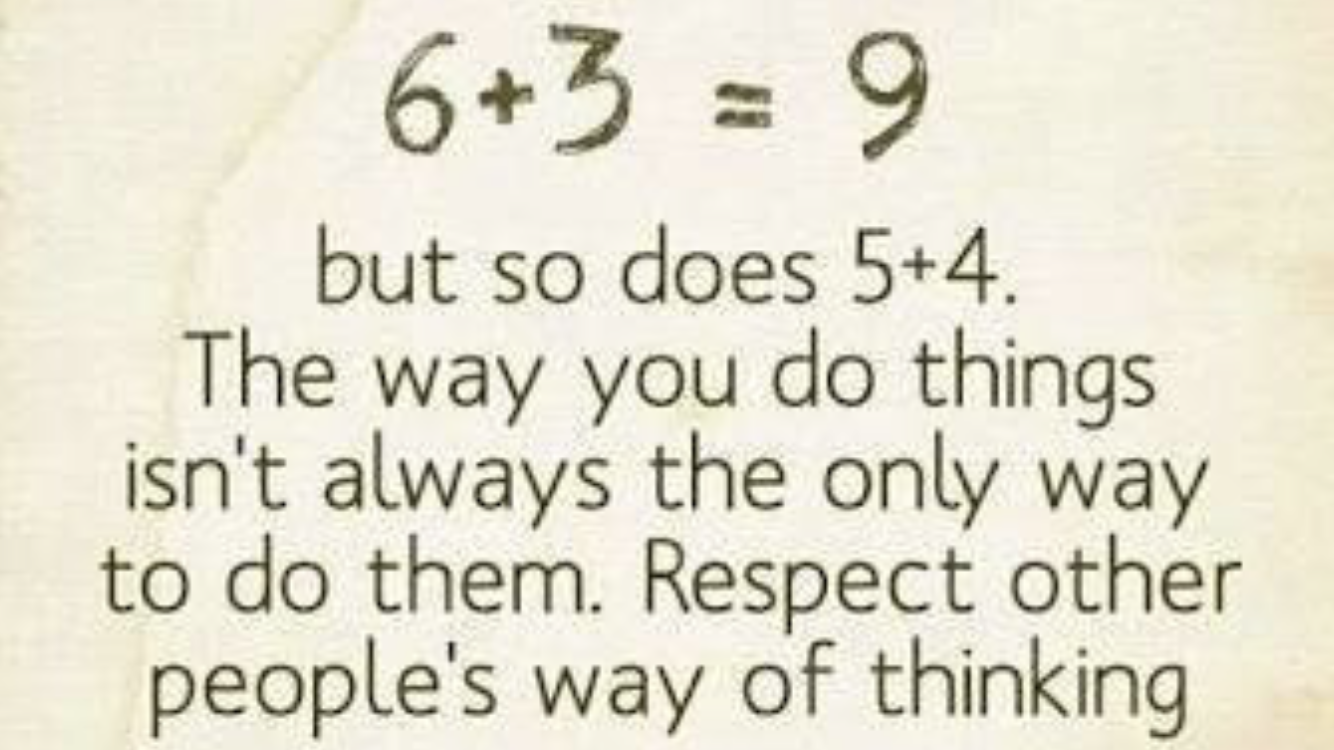
THERE’S ALWAYS MORE THAN ONE SIDE OF THE TRUTH
R E S P E C T O T H E R S
B E K I N D
Just Don’t See all sides of the TRUTH
B E A C A R I N G C A T A L Y S T:
R E C O G N I Z E
it’s m u l t i c o l o r s. . .
T R U T H F U L L Y
G E N U I N E L Y
A C C U R A T E L Y
A U T H E N I C A L L Y
V E R A C I O U S L Y
Be in A W E of it A L L
MEN SUCK (and sometimes others, too)
G U I L T Y
You ever feel that
F E E L I N G. . .
Sometimes I feel so guilty
I need no
J u d g e
J u r y
E x e c u t i o n e r
I’m most perfect at all three
s i m u l t a n e o u s l y. . .
Do you believe
not once
but hundreds of times
I have actually stood before groups
and proudly declared:
There’s no one better than the ONE
standing before you right now;
NO ONE
who could give a better presentation that
M E. . .
I would say:
“I BELIEVE THAT WITH ALL OF MY HEART!”
. . .”but,”
“I K N O W IT’S NOT TRUE,
and that’s what makes you work to be even better. . .”
G U I L T Y
M E N S U C K
Maybe it’s because
I’m the biggest hypocrite I know
Maybe it’s because
I’ve been married and divorced
Maybe it’s because
I’ve been re-married now for 31+ years
Maybe it’s because
I’ve worked since 1994 in offices filled with women
but I’ve either
heard
seen
lived
experienced:
M E N S U C K
I get that an awful lot. . .
and yes. . .
the last time I checked,
I still kind of fit into that category
which has had me
putting my lips together very tightly
while opening my ears
Grand Canyon
w i d e l y. . .
The gift of an Open Ear
is the most valuable possession I can share. . .
And I try
not just to listen
I severely attempt to actually
h e a r
what a heart shouts
and a mouth can’t whisper. . .
“Well, he left me; he just up and left me after 8 years”
“How come he doesn’t listen, why doesn’t he hear what I say, or worse yet, if he does hear why doesn’t he acknowledge me?”
“Why is it always about sex; why does it always start there or always have something done to end there; why can’t we talk, really talk and listen and be intimate but cuddling or just holding hands without it always ending up THERE; don’t men know that the greatest sex act is just being held, being heard, being listened to?”
“Why’s the bottom line always about how much things cost and how he decides how money gets spent or saved?”
“Why am I never good enough for him; why does he feel the need to change me or at least live a certain lifestyle OR ELSE?”
“I can’t stand all of the lying.”
“He never really tells me how he feels and I’m a terrible mind-reader.”
T R U S T M E
What I have to offer
IS N O T
a d v i c e;
I am no Guru
I’m not a
Dr. Phil
Judge Judy
Joel Olsteen
Best-Selling Author on relationships. . .
I offer
simply. . .merely
what’s in each of us:
My Ears
My, o u r Ability
to Listen. . .
But are ears are useless
unless they’re actually attached to
our hearts. . .
There has to be a willingness
to not just listen
to not just hear
. . .but a heart
that lets Another know
they’ve been
Acknowledged
Recognized
Noticed
Accepted
Un-Judged
L O V E D
It’s about letting Another
not so much know
but actually FEEL:
Right now
Your Pain
is My Pain
Your Disappointment
Is My Disappointment
Your Tears
are My Tears
Your Heart
is My Heart
and they are
S H A R E D
never to be again
carried alone. . .
when T H A T is mutual
The Caring Catalyst
of me interweaves itself into
The Caring Catalyst of you
and WE
become a magnificent tapestry of colors
The brightest and darkest of hues
that SHOUTS
WE NO LONGER ARE HOLDING ON BY A THREAD
or a thick-never-to-be-severed-cable
but a tapestry
that serves a most magnificent safety net. . .
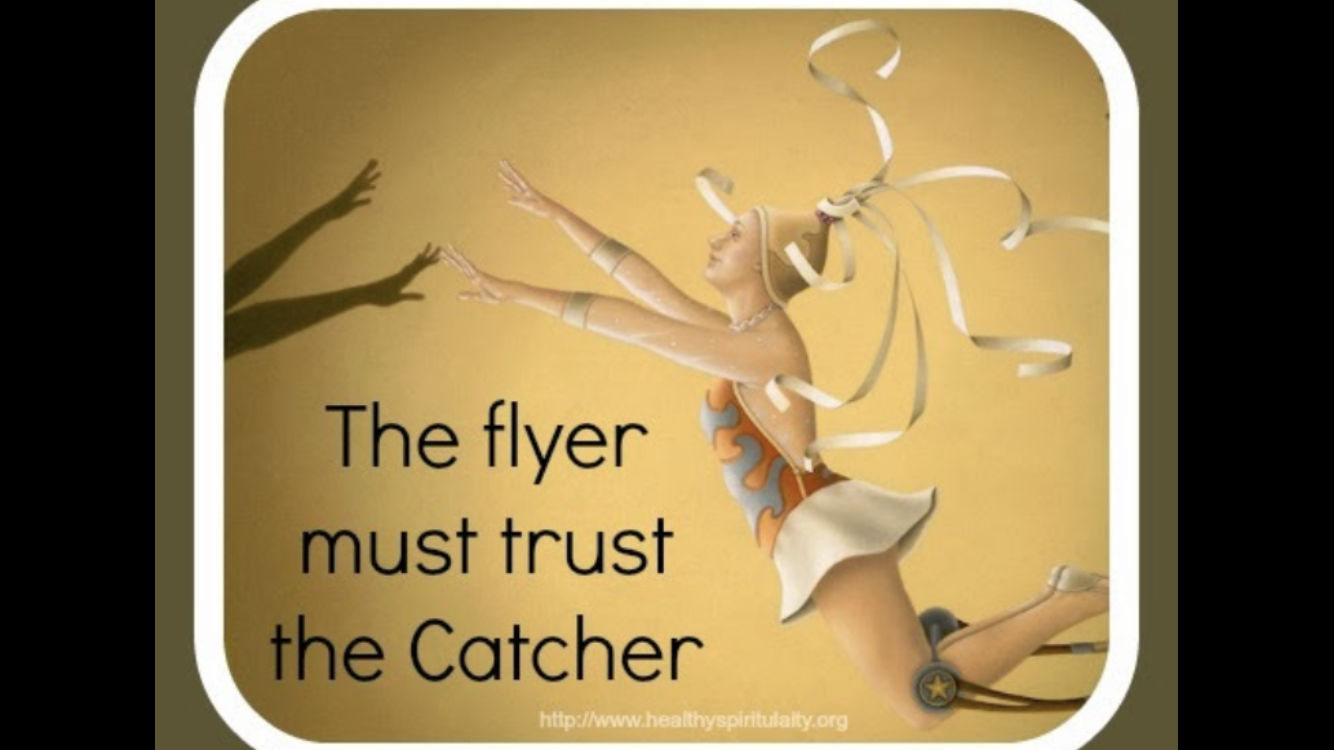
I remember a story that Henri Nouwen once told about the trapeze artists known as
THE FLYING RODLEIGHS
. . .he asked one of flyers the secret of trapeze artists
and one of the acrobats explained:
“The secret is that the flyer does nothing and the catcher does everything. When I fly to Joe (my catcher), I have simply to stretch out my arms and hands and wait for him to catch me and pull me safely over the apron. . .The worst thing a flyer can do is try to catch the catcher. I am not suppose to catch Joe. It’s Joe’s job to catch me. If I grabbed Joe’s wrists, I might break them, or he might break mine, and that would be the end for the both of us. A flyer must fly, and a catcher must catch, and the flyer must trust, with outstretched arms, that his catcher will be there for him.”
M E N S U C K
She said. . .
They said. . .
Yes. . .Yes, it’s true:
M E N S U C K
(and sometimes, others, too)
We all have the great capacity
to do just that sometimes
and actually make the worst
of the worst. . .
B U T
We have a great propensity
to be A Catcher
of One flying dangerously through the air
and bringing them not only to safety
but to an assurance
that can’t be found anywhere else than
through the intimacy
of a pure relationship . . .
Be That
B E T H A T
O f t e n
Now
And always
Every Next Time
A V A I L A B L E. . .
Your P R E S E N C E
doesn’t require your advice
just your v a l i d a t i o n. . .
G U I L T Y
I feel IT
from time to time
for not understanding
but hopefully never because of the lack of
WANTING TO
UnCleaned Windows
Edward Wallace Hoch
got it right:
THERE IS SO MUCH GOOD IN THE WORST OF US,
AND SO MUCH BAD IN THE BEST OF US,
THAT IT HARDLY BECOMES ANY OF US
TO TALK ABOUT
THE REST OF US
I have a strong belief that I’ve always been born to live in a Condo. . .
No shoveling snow
No cutting grass
No planting flowers
No mulching
No pruning trees
No cutting hedges
No raking leaves
No sweeping sidewalks
No watering
No outside painting
No gutter cleaning
No washing windows. . .
Well, maybe washing some windows, huh?
I suppose I could hire someone to clean the Condo
and do the windows
but would it be done perfectly?
I still remember one of the chores I had around my grandmother’s house when I lived with her during college was to kind of do all of those things, especially cleaning the windows. . .
Window Cleaning was done twice a year. . .
Definitely in the Spring
and usually that last nice day of Fall
(when I wanted to be watching Football instead)
I was given my paper towels
and a special formula that made Windex jealous. . .
After the Ladder was set up,
I ascended towards the Heavens
to make the view crystal clear. . .
And I made
T H A T
trip several times;
There were a lot of windows
and I most assuredly
had the impeccable gift of being able to
S T R E A K
magnificently every single one of them;
Alas,
it was the gift I was cursed to possess. . .
So,
though the job was required for me to complete bi-annually,
it would seem that it took me the months in between
to actually Accomplish–
Such was the keen,
ever JUDGING eye
of my grandmother. . .
I could never quite figure out how she,
with cataracts,
and often in need of glasses,
could spot a
S T R E A K
with her eyes closed;
I hated it then. . .
And owning a house now,
I detest it still–
though I rarely do the Windows
T H A T
often or under the not-so=harsh judgment
of Erin’s
Laser Vision Corrected Surgery. . .
W H E W
Funny though,
even with an ample dose of my Grandmother’s DNA,
I don’t have the window-cleaning gene
strongly inherent in me. . .
Funnier still,
I have a huge amount of
M A R Y
in me. . .
I always seem to have a not-so-poetic way of pointing out
WHAT’S WRONG WITH SOMEONE ELSE’S WASH
without much noticing
the dirt and streaks on my own Windows. . .
Hmmmmmmmmmmmm of the Day:
Maybe it’s not which window
I look out of at all
so much as which
M I R R O R
I’m actually standing. . .
Wait. . .
I think I see a Spot. . .
Y o u ?
I Believe / I Know
What’s the big deal? What’s the Difference?
I Believe! I Know!
Semantics?
There’s never a time I stand before an audience; never a time I walk into a patient’s room; never a time I walk into a facility; never a time when I’m one-on-one with a person and not with all of my heart believe that I’m the absolute BEST PERSON to be there! I believe it with all my might, strength, heart, my whole life–I Believe it!
Egotistical?
As much as I Believe it with my whole Being. . .I KNOW it’s not true. . . .
And that, that’s my greatest source of motivation every day, in every situation.
Unblinkingly, may IT ever be so!