SIMPLE QUESTION:
WHAT. . .uhhhh, WHO GIVES YOU HOPE
THEY SAY:
That watching inspirational films or short clips
goes a long way in settling and grounding us
especially if
in some way
WE KNOW
the person in the story
or if we dare flip through the pages of our own personal biographies
WE ARE THE
H O P E
THE MORAL:
WHEN YOU CAN’T FIND HOPE–BE IT

PLAYING YOUR DREAMS
87-year-old Diana moved the mentors and Newcastle station audience with her performance of ‘Dreams,’ an original composition. The Piano has a fresh new face! Jon Batiste joins Claudia Winkleman and MIKA as they return for a brand-new series of The Piano in search to unearth more of the UK’s most exciting amateur pianists.
Some people Dream DREAMS all of their lives
Some people make their Dreams come true
Some people, Miss Diana actually plays her DREAM
and something in us gets DREAMED
just like that. . .
THE BEST DREAMS HAPPEN
WHEN YOU’RE AWAKE. . .
Ahhhhhhhhhh. . .
A DREAM CHASER
A DREAM CATCHER
A DREAM MAKER
. . .WE ARE
Shhhhhhhhhhhhhhhhhh. . .LISTEN AGAIN. . with another version. . .
BEING TRUE TO YOUR QUEST
HAVE YOU GIVEN UP. . .
ARE YOU DREAMLESS. . .
WHAT IS YOUR MOST IMPOSSIBLE DREAM. . .
‘The Impossible Dream’ is the title track from Aaron Lazar’s debut album IMPOSSIBLE DREAM. Featuring an all-star cast of artists from the theater and pop world: Kristin Chenoweth, Josh Groban, Lin-Manuel Miranda, Kelli O’Hara, Leslie Odom, Jr, Liz Callaway, Neil Patrick Harris, STING and many more! Proceeds from the sale of the album will benefit the ALS Network and Aaron Lazar who continues to face ALS with unwavering resilience. Purchase CD/Vinyl/Digital Download: https://hypeddit.com/impossibledream iTunes here: https://music.apple.com/us/album/impo…
ABOUT THE ALBUM This inspiring nine-song collection features a remarkable roster of Lazar’s friends, supporters, and artistic idols, including multi-platinum singer, songwriter, and Tony nominee Josh Groban; Tony and multiple Emmy winning film star Neil Patrick Harris; Tony and Grammy Award-winning, three-time Emmy and two-time Academy Award-nominee Leslie Odom, Jr.; 17-time Grammy Award-winning icon Sting; Pulitzer Prize, Grammy, Emmy, and Tony award-winning songwriter, actor, director and producer Lin-Manuel Miranda; Tony and Emmy winner Kristin Chenoweth; Tony Winner and Emmy and Grammy Nominee Kelli O’Hara; the late Rebecca Luker (three-time Tony nominee); Tony and Grammy nominee Norm Lewis; multi-platinum recording artist and voice from “The Greatest Showman,” Loren Allred; and many more.
THE IMPOSSIBLE DREAM Mitch Leigh & Joe Darion To dream the impossible dream To fight the unbeatable foe To bear with unbearable sorrow To run where the brave dare not go To right the unrightable wrong To love pure and chaste from afar To try when your arms are too weary To reach the unreachable star This is my quest To follow that star No matter how hopeless No matter how far To fight for the right Without question or pause To be willing to march into hell For a heavenly cause And I know if I'll only be true To this glorious quest That my heart will lie peaceful and calm When I'm laid to my rest And the world will be better for this That one man, scorned and covered with scars Still strove with his last ounce of courage To reach the unreachable star . . .
(My thanks to the composer and lyricist as well as to all the incredible vocalists and musicians, via Aaron Lazar.)
Pssssssssssssssssssssssssssssssssssssssssst:
Know how to tell, , whether or not your dreams are coming true?
Well, if the sun came up today, things are looking pretty good.
If the sky is still blue, high above the clouds, I’d say keep doing what you’re doing.
And if, somewhere, there are eagles soaring, tulips blooming, and falls cascading… could it be, , most of them already have?
. . .just sayin’
YOUR VERSE
Dead Poets Society is a wonderful film, obviously filled with a lot of references to English and American poetry. In this scene, John Keating (Robin Williams) teaches his pupils the reason for reading and writing poetry, quoting Whitman’s Leaves of Grass:
O ME! O life!… of the questions of these recurring; Of the endless trains of the faithless—of cities fill’d with the foolish; Of myself forever reproaching myself, (for who more foolish than I, and who more faithless?) Of eyes that vainly crave the light—of the objects mean—of the struggle ever renew’d; Of the poor results of all—of the plodding and sordid crowds I see around me; Of the empty and useless years of the rest—with the rest me intertwined; The question, O me! so sad, recurring—What good amid these, O me, O life?
Answer. That you are here—that life exists, and identity; That the powerful play goes on, and you will contribute a verse. . .
AND JUST WHAT IS YOUR VERSE. . . ?
Sometimes I feel
like an unfinished poem
Looking for just the right
word or phrase
Sometimes I feel the most
incomplete without a final punctuation mark
searching for a word
It doesn’t exist or come from me
But you,
Oh how you bring what
I don’t possess but desperately need
So _____quickly
before the paper blows away
and the ink runs low
or the pencil point breaks
Finish me so we can start
a new verse worthy of the both of us
GONE FISHING
Sometimes the greatest
F I S H
caught are the ones
you never put a line in the water
to catch. . .
In fact,
those fish swim everywhere
in, out, through your imagination
for the greatest tales ever. . .
When this not-not-so-small-minnow
jumped into my boat
I wasn’t ‘fishing’ for it but
it caught me way before I even thought of reeling it in. . .
It birthed
almost immediately these
poetic thoughts:
FIRST TIMES
I don’t remember
the first time
I sucked a lemon
but I’m sure it
prepared me for the
second time
I knowingly wouldn’t
suck up to pucker up
again. . .
Candle flame burns
Electrical outlet shocks
Black ice falls
Hit the thumb instead of the nail hammerings
Hot pans on hotter stoves
Stumbles off of shaky branches
All First Times
that make a
Second Time
not so much a lesson learned
as one to be remembered
to ever be taught
again. . .
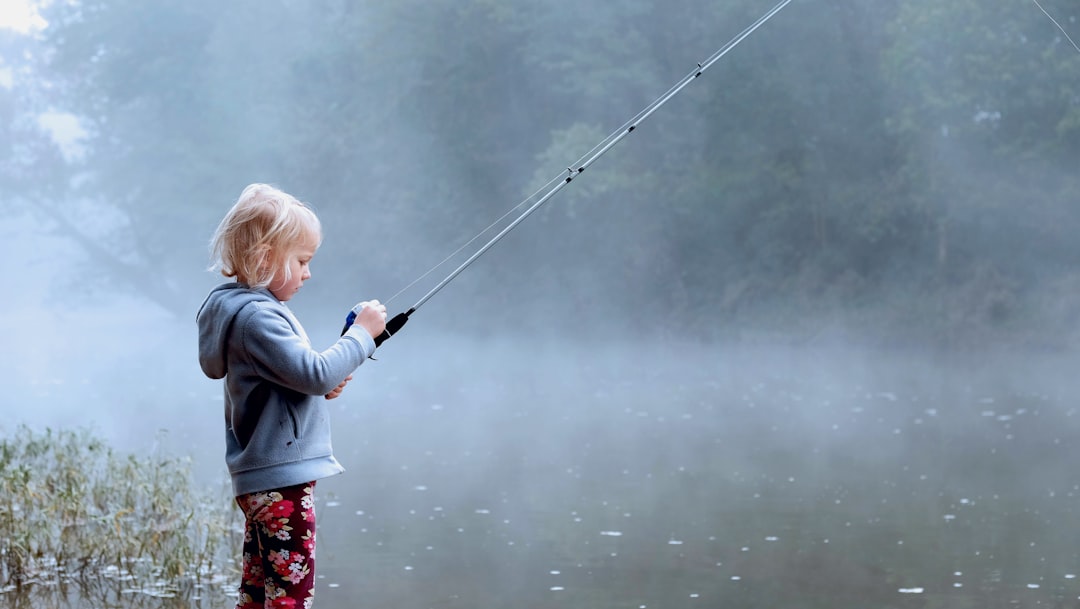
FISHING BEFORE YOU KNOW HOW TO FISH Courtney Martin Through the pines and the one maple I hear her. I shouldn’t have gone fishing if I didn’t know how to fish. I shouldn’t have gone fishing if I didn’t know how to fish. There she stands legs impossibly long pink and black polka dot swimsuit baggy pole in her hands and a little oval sunfish impossibly on her hook. I don’t tell her, but I do think Oh, sweet girl, life is always like that. Fishing before you know how to fish. Leaving before you know how to leave. Speaking before you know how to speak. Fighting before you know how to fight. Loving before you know how to love. Dying before you know how to die. We are all the child with the pole worrying about who we’ve hurt. And we are all the fish on the hook, hoping for mercy. Her aunt hears her muttering prayer and though she hasn’t unhooked a fish in 30 years grabs the wriggling innocent in her hands and dislodges metal from cheek. And this, too, is all of us. Saved again and again by prayer we didn’t know we were saying and a witness we forgot was listening. Thank you, Miss Courtney for taking us Fishing before we knew we even had a pole, bait and some not-always-needed-know-how. . . . |
C L O U D E D
During this NATIONAL MONTH OF POETRY I have used poems that have inspired me to write poems. I began the month with a poem by Mary Oliver and could spend months using her poems that have countlessly inspired me not just to write but to pause, reflect, ponder what can’t always be seen, heard, tasted, smelled or touched but most deeply felt. . . here’s hoping it does the same for you in the NOWNESS of your TODAY:
It doesn’t have to be
the blue iris, it could be
weeds in a vacant lot, or a few
small stones; just
pay attention, then patch
a few words together and don’t try
to make them elaborate, this isn’t
a contest but the doorway
into thanks, and a silence in which
another voice may speak.
— Mary Oliver
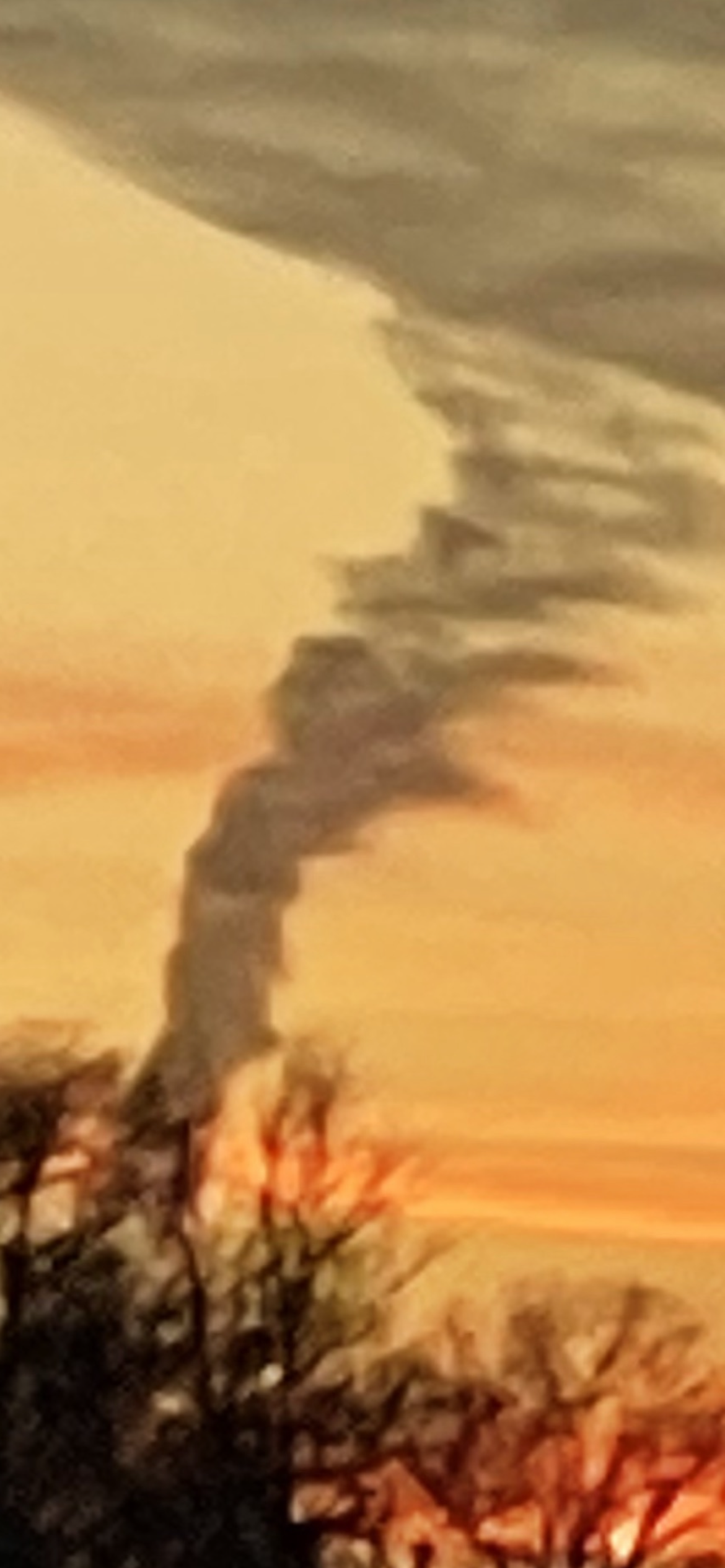
They are no longer clouds
but brightly striped ribbons

blown free from packages
never quite opened
or worse
opened and neatly tucked away
in drawers that don’t easily open
seemingly safe
from any robber
any loss
any misplacement
and sadly
any use
These ribbons don’t know of a wind
that’ll wave back
in the harshest or gentlest of breezes
no matter how much
mind
you pay them
They dwell in sunlight
and more of an ahhhhhhhh
to any sunset
if but noticed
But for a Now
This Moment
recognized
so briefly
like confetti

gone in a sudden burp of air
They are seen
as a Comma
in a Pause
that refuses to be left behind
before a never ending sentence
ahead
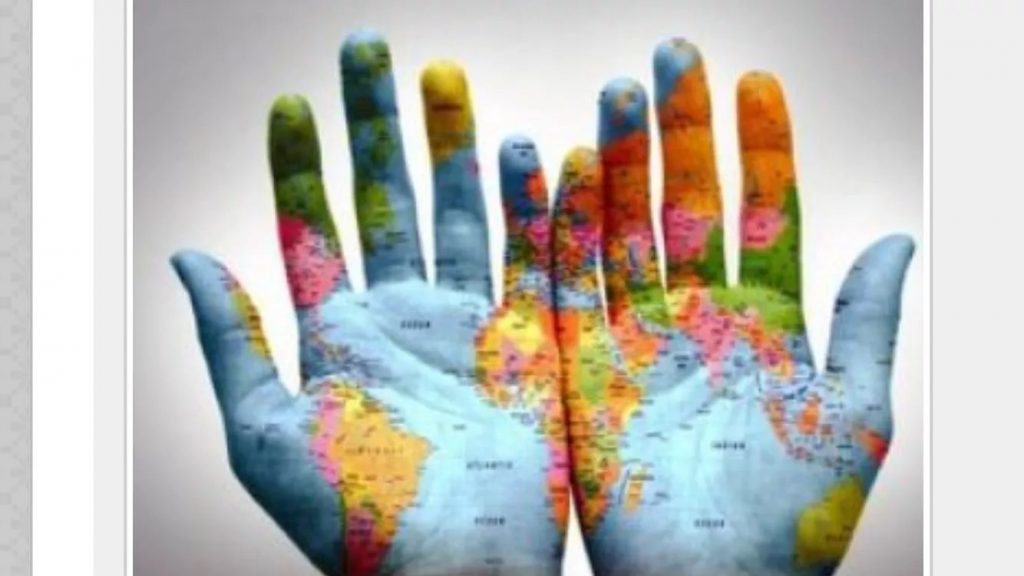
Laying down the whole wide World

“later that night
i held an atlas in my lap
ran my fingers across the whole world
and whispered
where does it hurt?
it answered
everywhere
everywhere
everywhere.”
Warsan Shire
When
W O R D S
find me
in the form of a poem
they often
e v o k e
my words to form
a poem:

This Body
has laid in a crib
placed there by loving hands
This Body
has laid in a field
looking up at cloud formations
the rising
the setting sun
and the stars that have poked holes
in the black velvet curtain of night
This Body
has laid in sand
having the sun seep into its pores
while the ocean has baptized it
This Body
has laid in a bed
companioned by a love
never to be fully described
but intimately known
This Body
has been on a gurney of pain
not to so much experience Cure
as to have a certain healing
This Body
will lay in the ground
It’s ashes swallowed up
not to be forgotten
but to begin again
in a new way
to lay again

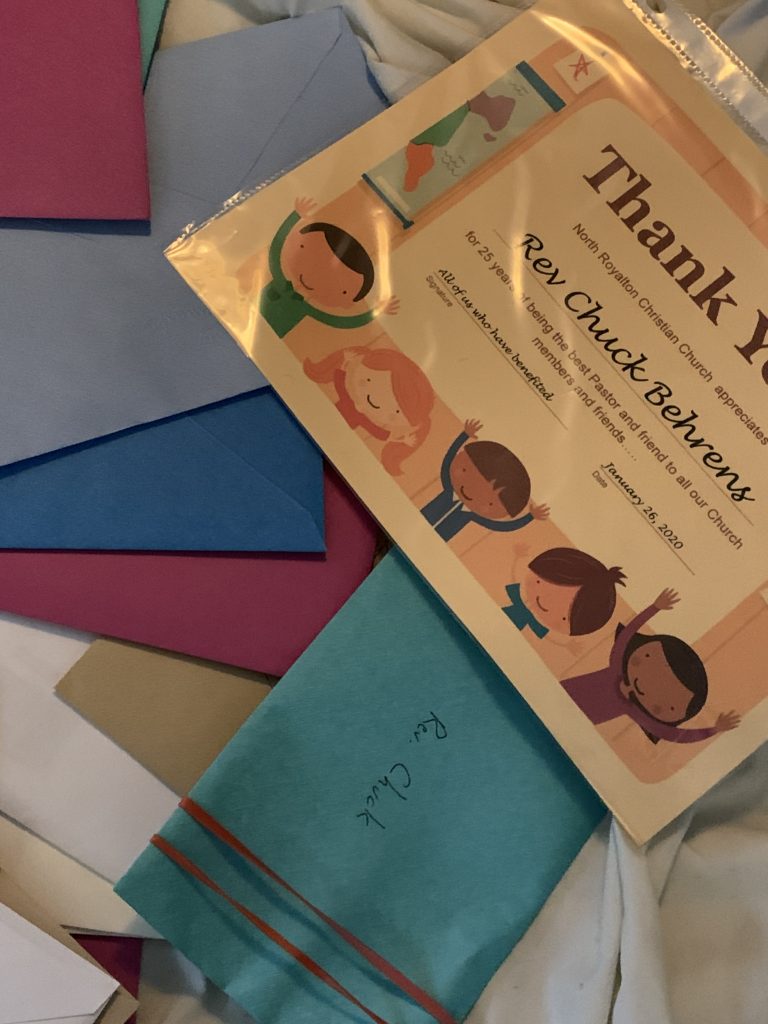
25 Years and SO MUCH MORE

25 of anything is a good amount
but 25 years
well, now,
that’s even more of a profound number
and account. . .
A QUARTER OF A CENTURY
25 Years and more. . .
So very, very much more
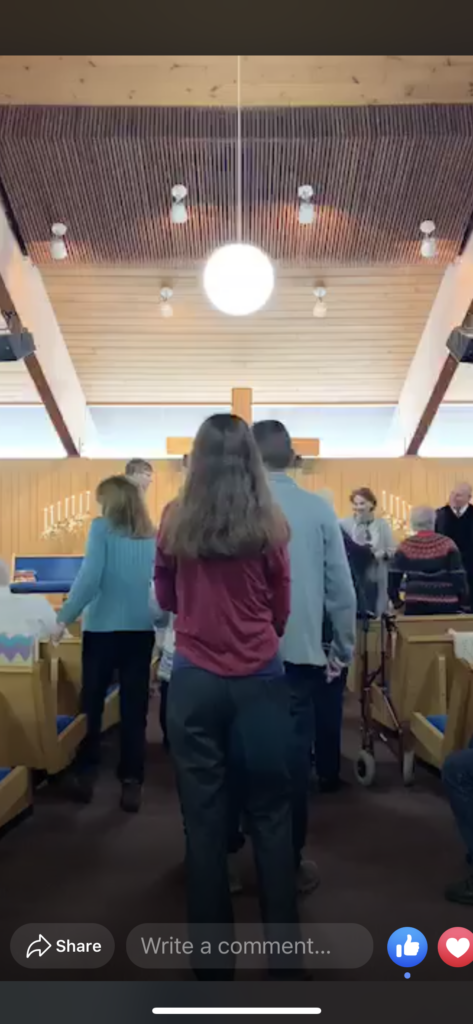
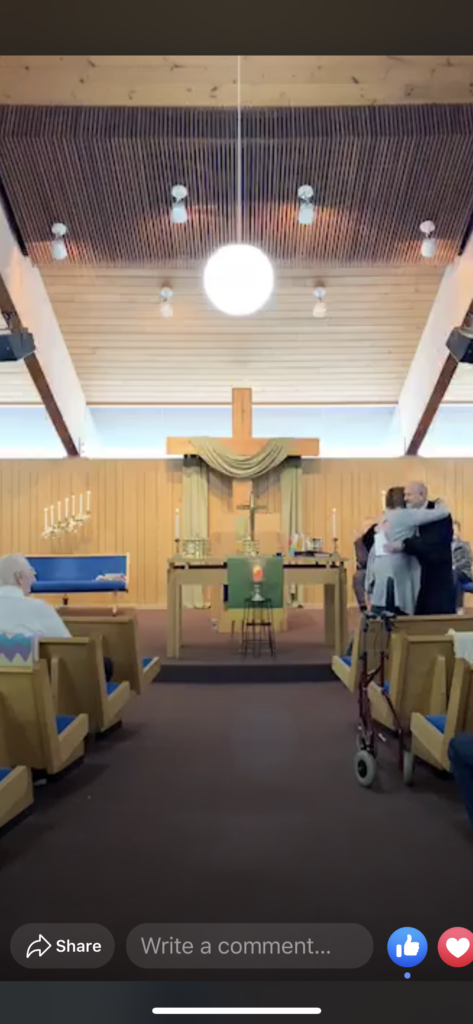
I began serving North Royalton Christian Church on January 15, 1995, knowing that I NEEDED to have a part-time position to supplement my income having jumped from a full-time Senior Minister position at Westlake Christian Church and a part-time chaplain’s position at St. John Westshore Hospital to a Spiritual Care Coordinator’s position at Hospice of the Western Reserve. It was a JUMP then and now I don’t regret even though it was a major change for me and the family. I NEEDED to have this position more than I WANTED to have the position and when Susan Cash, an Elder and also one of the primary people on the Search Committee, stood up this past Sunday in Church and marked the occasion with some fabulous and humbling remarks, (which can be seen at the bottom of this post in full taken from the February Church Newsletter) It only summoned the memory to recall things that the weight of, buckles knees and humbles the heart.
I thought 25 years ago, I NEEDED North Royalton Christian Church for the supplemental income when there have been few moments in those 25 years that have failed to remind me that I NEEDED North Royalton Christian Church for so very much more, and oh, oh how they have delivered in more ways that we will all fail to fully comprehend. My best moments (and hopefully, theirs) is when we have lived in full, vivid living color that I am not THE minister of North Royalton Christian Church, but actually and fully, A MINISTER of the church and our greatest achievements and even failings, have been when we’ve seen each other that way. WE, US, not I or me, do the ministry of the church. In essence, they made me A Caring Catalyst before I knew the true definition on one.
Maybe it’s ironic, but as we are celebrating 25 years of ministry together, I am also looming on celebrating 40 years of being ordained this May. In such a profound and powerful way I fully KNOW that I’m not just a sum total of all the pieces/parts/experiences that make me up, but literally, all of the lives who have made my life, MY LIFE.

What excites and motivates me now is that there are still lives, pieces, parts, and experiences that continue to be added, to further, and not just expand or make my tapestry, but actually BE MY TAPESTRY. A single thread a tapestry does not make. I’m so richly consecrated to have that proven moment by moment and better still, person by person.
Much in the same vein of Robert Frost’s poem, STOPPING BY THE WOODS ON A SNOWY EVENING, I so much embody the last verse:
THE WOODS ARE LOVELY, DARK AND DEEP,
BUT I HAVE PROMISES TO KEEP,
AND MILES TO GO BEFORE I SLEEP,
AND MILES TO GO BEFORE I SLEEP.
In a way that echoes those very sentiments, Susan ended her much appreciated remarks with a quote by an author I’ve never really read, Ursula Le Guin. It comes from her novel, ALWAYS COMING HOME:
“When I take you to the Valley, you’ll see the blue hills on the left and the blue hills on the right, the rainbow and the vineyards under the rainbow late in the rainy season, and maybe you’ll say, ‘There it is, that’s it!’ But I’ll say, ‘A little further.’ We’ll go on, I hope and you’ll see the roofs of the little towns and the hillsides yellow with wild oats, a buzzard soaring and a woman singing by the shadows of a creek in the dry season, and maybe you’ll say, ‘Let’s stop here, this is it!’ But I’ll say, ‘A little further yet.’ And we’ll go on, a you’ll hear a quail calling on the mountain by the springs of the river, and looking back you’ll see the river running downward through the wild hills behind, below, and you’ll say, ‘Isn’t that the Valley?’ And all I will be able to say is, ‘Drink this water of the spring, rest here awhile, we have a long way yet to go without you.’”

I know that my best steps are the ones I’ve never taken alone
but in sync with others
and that the ones to be taken
could be the best ones
still yet to come
with the promise
that those taken long after my last step
could be the very best yet
even more
because of any step I’ve walked along with others
. . .those are the steps
that keep marching forward
. . .ALL-WAYS forward
advancing
inspiring other steps
to be taken
experienced
s h a r e d

25 Years
and More
so very, very much
M O R E
that shows you the difference between
N O T I C I N G
and
K N O W I N G
I have been so magnificently blessed
in experiencing both
and the best part–
I still do
I still am

WE ARE HUMBLY APPRECIATIVE
Thank you
January 26, 2020
In Honor of Chuck and Erin’s 25th Anniversary
In January 1995, we didn’t have GPS. There was no Febreze or Swiffer. Selfies & texting didn’t exist because there were no smart phones. Invisible braces were far off in the future. There was no Wikipedia, Google or Facebook and online banking and shopping at Amazon were not yet available.
If you were attending NRCC in early January of 1995, you know we didn’t have a minister either until later in the month. That’s when Chuck joined us.
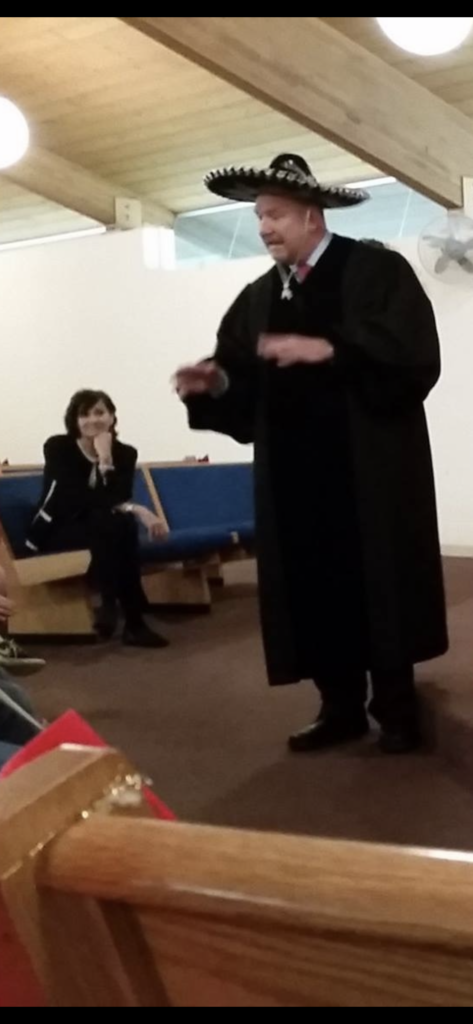
Over the years, Chuck has presented about 1200 sermons to us. He doesn’t preach, he tells parables—I remember one of his first Sundays here he told us about a character in his hometown who the towns’ people called Ugly. It was a very touching and dramatic story. Chuck has delivered a sermon from the top of a ladder; he’s come dressed as a bum; was an Elvis impersonator; has been Paul, Peter, and Judas; and he often sings his sermons. Once his niece sat in our congregation as a homeless person.
I don’t think he has ever repeated a sermon let alone repeated a theme.
And standing alongside Chuck is Erin—we got a twofer—two special gifts to this congregation. We thank God for sending you both to us. You’ll never know how much we appreciate your devotion, your dedication, your love, your spirit, your teachings, and your wisdom.
I was watching a program about the writer Ursula Le Guin recently and the program ended with her reading from her novel Always Coming Home. I think her words speak to Chuck and Erin’s ministry here:
“When I take you to the Valley, you’ll see the blue hills on the left and the blue hills on the right, the rainbow and the vineyards under the rainbow late in the rainy season, and maybe you’ll say, “There it is, that’s it!” But I’ll say. “A little farther.” We’ll go on, I hope, and you’ll see the roofs of the little towns and the hillsides yellow with wild oats, a buzzard soaring and a woman singing by the shadows of a creek in the dry season, and maybe you’ll say, “Let’s stop here, this is it!” But I’ll say, “A little farther yet.” We’ll go on, and you’ll hear the quail calling on the mountain by the springs of the river, and looking back you’ll see the river running downward through the wild hills behind, and you’ll say, “Isn’t that the Valley?” And all I will be able to say is “Drink this water of the spring, rest here awhile, we have a long way yet to go and I can’t go without you.”
Thank you Chuck and Erin
Written by Susan Cash
The Blog Post That WASN’T
Psssssssssssssssssssssssssst of the Day:
When your Plan A fails
WORK YOUR PLAN B
like it’s your Plan A +
. . .the quicker you adapt;
get OVER
YOUR PLAN A
and embrace your PLAN B
the more successful
and even better
the a s s u r a n c e
there’ll never be a
P L A N C
A W E shucks
W H E N. . .
when was the last time you were
A W E D
Maybe the better question. . .
WHEN WILL BE THE NEXT TIME. . . ?
Well. . .
H E R E ‘ S
Eight Reasons Why Awe Makes
YOUR LIFE BETTER
Research suggests that awe can make you happier, healthier, more humble, and more connected to the people around you.
Starting 15 years ago, scientists have been studying the complex and mysterious emotion called awe—one you might have felt if you’ve stood in front of the Taj Mahal, hiked among towering redwoods, or had your mind blown at a concert, play, or ballet.
Inducing goosebumps and dropped jaws, awe experiences are remarkable in their own right. Moreover, a growing body of research suggests that experiencing awe may lead to a wide range of benefits, from happiness and health to perhaps more unexpected benefits such as generosity, humility, and critical thinking.
In our busy lives, seeking awe may be low on our list of priorities. But we might be underestimating its power. “One simple prescription can have transformative effects: Look for more daily experiences of awe,” writes the Greater Good Science Center’s Dacher Keltner.
The latest research suggests that taking the time to experience awe—whether through engaging with nature, enjoying great art or music, or even bingeing on breathtaking YouTube videos—may be a pathway to improving your life and relationships.
1. Awe may improve your mood and make you more satisfied with your life
Need a mood boost or a stress slayer? Some studies suggest that experiencing awe may help.
And you don’t have to take a trip to the Grand Canyon to get the job done. Just watching awe-inducing slideshows and videos can improve your mood and well-being, according to a few studies. Another study found that people who read a short, awe-evoking story about seeing Paris from the top of the Eiffel Tower reported greater life satisfaction in that moment than people who read a story about seeing a plain landscape from up high.
Of course, it’s tough to beat real-world experiences—so in a recent study, researchers took military veterans and youth from underserved communities whitewater rafting. They found that the more awe the participants experienced, the more improvement they saw in their well-being and symptoms of stress one week later. According to a different survey the researchers conducted, undergraduate students reported greater life satisfaction and well-being on days when they spent time in nature, which was attributable to the higher level of awe they felt on those days. This suggests that awe just might be a crucial ingredient in nature’s restorative powers.
2. Awe may be good for your health
Experiencing awe over time could potentially have long-term health benefits, at least according to one study. People with a greater general tendency to experience awe—but not any of the other seven positive emotions studied—had lower levels of interleukin-6 (IL-6), a marker of inflammation (too much inflammation can lead to a host of chronic diseases).
A second part of the study found that participants who reported feeling more “awe, wonder, and amazement that day” had lower levels of IL-6; this was true even after accounting for people’s general tendency to experience awe and be open to new experiences. In other words, all of us—not just people who are prone to experiencing awe frequently—may be able to reap the health benefits of a particularly wondrous day.
However, this study can’t tell us whether awe decreases inflammation or whether people with more inflammation are less likely to experience awe—a question for future research.
3. Awe may help you think more critically
Some studies suggest that awe may be able to sharpen our brains. One study found that when people were induced to feel awe, they were less persuaded by weak arguments than people who did a neutral activity (imagining doing their laundry). In contrast, some other positive emotions—like anticipatory enthusiasm or amusement—made people more susceptible to weak arguments.
Intriguingly, a recent theoretical paper argues that awe may help facilitate scientific learning and reasoning in children. For example, when a child sees an anvil and a feather drop at the same rate in a vacuum, this experience likely violates their intuitive understanding of how gravity works, evoking feelings of awe that lead them to develop a new theory about the relationships between weight, gravity, and motion.
Similarly, a recent study found that people who have a greater disposition to experience awe had a more accurate understanding of the nature of science and were more likely to reject creationism and other scientifically questionable explanations about the world. Importantly, these people didn’t have greater “faith” in science; they just understood better how science works.
4. Awe may decrease materialism
A few studies suggest that experiencing awe may dampen feelings of materialism. The experimentwith the Eiffel Tower story also found that, when given a hypothetical choice between a material good (such as a $50 backpack) or an experiential product (such as a $50 iTunes gift card), people who read the awe-inspiring story chose the experiential product more often than people in the other group did.
In another study, participants who recalled an awe experience placed less value on money than did participants who recalled a happy or neutral experience, and viewing awe-inducing images reduced the effort people were willing to put into getting money (where effort was measured by tolerance for listening to an unpleasant sound).
Why might awe decrease materialism? According to the researchers, the answer may lie in the self-transcendence that awe can inspire. “People in awe start to appreciate their sense of selfhood as less separate and more interrelated to the larger existence,” they write. “The experience of awe elevates people from their mundane concerns, which are bounded by daily experiences such as the desire for money.”
Further evidence for this idea comes from a recent study, suggesting that awe can function as a buffer against negative emotion when you lose material possessions. After time spent marveling at the world around you, misplacing your new sunglasses might not feel so bad.
5. Awe makes you feel smaller and more humble
One of the most profound effects of awe is how it can change our perception of ourselves relative to the larger world. In particular, multiple studies have shown that awe can make us feel small, diminished, or insignificant—what researchers call the “small self” effect.
In one particularly interesting study, researchers asked visitors to Yosemite National Park and Fisherman’s Wharf (a tourist area in San Francisco) about their feelings of awe and other emotions, as well as their sense of self. Tourists at Yosemite reported experiencing significantly more awe, represented their current self with smaller circles (when given a choice of sizes), and drew self-portraits that were nearly 33 percent smaller than tourists at Fisherman’s Wharf.
Besides making people feel physically smaller, awe may also make people more humble. One recent study found that people who are more naturally prone to experiencing awe felt more humility and were rated as more humble by their friends. Experimentally inducing participants to feel awe led them to acknowledge their strengths and weaknesses in a more balanced way and to better recognize how outside forces contributed to their successes.
6. Awe can make you feel like you have more time
Awe may also expand our perception of time. One study found that people induced to feel awe felt less impatient and agreed more strongly with statements suggesting that time is plentiful and expansive than people induced to feel happiness. The researchers speculate that by immersing us in the moment, awe may allow us to savor the here and now.
“Awe-eliciting experiences might offer one effective way of alleviating the feeling of time starvation that plagues so many people in modern life,” the researchers write.
With more time on their hands, people feeling awe reported a greater willingness to offer that time to others—to volunteer their time, but not their money, to help a charity—compared to people feeling happy.
7. Awe can make you more generous and cooperative
In fact, multiple studies have found that experiencing awe may make people more kind and generous. For example, one study found that people with a greater tendency for awe were more generous in laboratory tasks like distributing raffle tickets between themselves and an unknown participant. And people who stood among awe-inspiring eucalyptus trees picked up more pens for an experimenter who had “accidentally” dropped them than people who stared up at a not-so-inspiring large building.
Together, these studies suggest that awe may prompt us to help others and to be more generous, perhaps because of the way it encourages us to focus less on ourselves and expands our perception of available time.
8. Awe can make you feel more connected to other people and humanity
Awe has an amazing capacity to bring people together. Research suggests that awe helps us feel more connected to the people in our lives and to humanity as a whole.
In one study, participants spent time near an awe-inducing Tyrannosaurus rex skeleton or in a regular hallway. When asked to describe themselves, the dinosaur viewers were more likely use universal descriptors (such as “a person” or “an inhabitant of the Earth”) rather than more specific descriptors (such as “tall,” “friendly,” or “a student”) than the other people, suggesting that awe increases our sense that we are part of a greater whole.
Another study found that people experiencing awe reported feeling more one with their community compared with people feeling neutral (an effect that may only hold for people with high self-esteem). Interestingly, another part of this study found evidence that culture may also influence awe’s effects, leading people from individualistic cultures to feel as if their social network has expanded (they feel closer to more people) and people from collectivistic cultures to feel closer to those already in their network.
As a 15-year-old science, awe research is literally in its adolescence. This means that many of the findings discussed in this article are based on very few studies (and thus should be taken with a grain of salt). What researchers don’t know about awe far eclipses what they do know. For example, we don’t know much about how awe affects children throughout development, how awe is related to religious and spiritual experiences, and how awe can be used therapeutically. And researchers are just beginning to explore the neuroscience of awe.
But with increasing interest among psychologists and the public in the topic, the future of this research looks bright—maybe even awesome. . .
well. . .
one thing might be as certain as morning and more real than night:
before you can share
a w e
you’ve got to be
a w e d
A W E D
t o
A W E