EVEN WHEN IT CAN BE FOUND AND DEFINED IN THE DICTIONARY
doesn’t mean that it can ever be fully
u n d e r s t o o d
MAMNOON
may be one of those words
|
Who Cares - What Matters
EVEN WHEN IT CAN BE FOUND AND DEFINED IN THE DICTIONARY
doesn’t mean that it can ever be fully
u n d e r s t o o d
MAMNOON
may be one of those words
|

to our Mental Health. . .
New research on “anti-mattering” and
overcoming loneliness.
I recently read this article from Psychology Today by Susan Krauss Whitborne, Ph.D and reviewed by Abigail Fagan that has me thinking about what Matters about Mattering. . .
There may be times that you’d like to feel invisible, but for the most part, people like to feel that other people notice and care about them. If you’ve ever walked into a social gathering and waited five minutes for someone to greet you, then you know how painful it is to feel like you’re blending into the background. Alternatively, consider the agony you can suffer when you’ve sent a text to a friend, only to have it sit there “delivered,” but unanswered.
When you stop and think about it, though, why should you care so much about whether people notice you or not? After all, the people who know you might be busy and preoccupied with other things. It shouldn’t make a difference, either, whether people who don’t know you acknowledge your presence. And, in reality, aren’t there those times when you’d be just as happy to get in and out of someplace without having to stop and talk to anyone?
In positive psychology, the quality of “mattering” is considered, in the words of York University’s Gordon Flett and colleagues (2022) to be “a key psychological resource.” Although you might occasionally enjoy the cloak of invisibility, Flett et al. propose that feeling chronically insignificant can become a “meta-pathology” that can interfere with the ability to obtain “optimal health and well-being.”
According to the Canadian researchers, rather than simply feeling invisible, when you suffer from what they call “anti-mattering,” you define yourself as someone whose “personal identity is dominated by the sense of not mattering to others.” You adopt this identity as a shield for the specific reason of protecting yourself from the stress of being ignored or regarded as irrelevant by others. The “anti” here, literally means “against” mattering, not simply being low in the feeling that you matter.
In the words of the authors, anti-mattering “should be regarded as a unique and specific vulnerability unlike any other risk factor… [it] can become a cognitive preoccupation that is internalized and results in self-harm tendencies and an inability or unwillingness to engage in self-care.”
The anti-mattering stance can come from many sources, such as facing constant rejection from potential romantic partners, employers, or even those rude people who never reply to your texts. However, the Canadian researchers propose that its most likely source can be traced to early childhood experiences of neglect by distracted and unresponsive parents. The hard shell around your need to matter eventually forms so that even the worst experiences of rejection will fail to penetrate.
Unfortunately, the more resistant the shell becomes to rejection or dismissive treatment, the harder it is for others to get through to you. Rewarding relationships become that much more difficult to attain as others learn that it’s easier just to stay away from you.
To tap into the unique qualities of anti-mattering, the Canadian researchers set about to develop a new 5-item Anti-Mattering Scale (AMS). Across a series of studies using young adult and adolescent samples, Flett et al. first built and then compared their AMS to an existing “General Mattering Scale” (GMS) in its relationship to measures of depression, loneliness, and anxiety. You can best get a sense of what’s at the heart of anti-mattering by testing yourself on these five items (rate yourself from 1, not at all, to 4, a lot):
Most of the participants in the undergraduate sample scored between 7 and 15 on this scale, with an average of just about 11.
Key to the idea of the AMS is that it’s not just feeling unimportant (or low in mattering). These five items from the GMS show this nuanced difference. Rate yourself with the same scale as the AMS:
Participants tended to receive higher scores on the GMS than the AMS, with the average at 16 and the majority scoring between 13 and 18.
From these averages alone, you can see that it is more common for people to feel that they have a valuable role in the life of others than to feel that they are not worth anyone’s attention.
Now that you’ve tested yourself on AMS and seen how it differs from GMS, it’s time to turn to the psychological consequences of turning away from others as a self-protective mechanism. As shown in the Flett et al. findings, the patterns of scores on key indicators of mental health, including depression, loneliness, and anxiety, showed that anti-mattering wasn’t simply the opposite of mattering.
Most importantly, the findings across the young adult and adolescent samples confirmed the predicted relationship between anti-mattering and loneliness as well as the incremental effect on depression of high AMS vs. low GMS scores. This pattern reflects, in the words of the authors, “ties between low mattering and a maladaptive early schema reflecting disconnection and alienation from others.” Combined, high AMS and high loneliness scores produce what Flett et al. refer to as the “double jeopardy of feeling alone and insignificant.”
To sum up, feeling that you matter is clearly a contributor to positive mental health. Anti-mattering can become part of a larger identity in which you feel that you lack value to others, even contributing to a sense of marginalization. Although the York University findings established the negative consequences of anti-mattering among young adults and teens, this basic need appears to be one that can form an important cornerstone of healthy development throughout life.
TAKE AWAYS. . .
IF YOU TRULY BELIEVE THAT
E V E R Y O N E
M A T T E R S
no if’s
no and’s
no but’s
no except’s
no until’s
no or’s
(NO CONDITIONS)
PLEASE:
Never fail to
ACT LIKE IT

It’s hard to believe that the song
by Jerry Garcia and the Grateful Dead
is over 50 years old
and yet still causes
A RIPPLE
harder still to believe all of the
RIPPLES
that still lie within you to
C A U S E
uhhhhhhhhhhhhhhhhh. . .
WAIT NO LONGER
WHAT’S THE FIRST THOUGHT THAT COMES TO YOUR MIND WHEN YOU THINK OF SPIDERS. . .
K I N D N E S S
. . .right?
I can’t remember but one or two times over the past 27 years of Hospice work and 42 years of being an ordained minister that I’ve actually had the opportunity to talk with a group of men. MEN DON’T HAVE MEETINGS OR GROUPS. Three or four times, tops; this past Tuesday was one of those times. It was a group of men who gathered for breakfast after voting to hear me talk about TAPPING INTO YOUR SPIRITUALITY
The group was attentive, engaged and conversational. They gave me a standing ovation with my ending quote from George Washington Carver, “HOW FAR YOU GO DEPENDS ON BEING GENTLE TO THE YOUNG, COMPASSIONATE TO THE ELDERLY, SYMPATHETIC OF THE STRIVING AND TOLERANT TO THE WEAK AND THE STRONG. . .BECAUSE ONE DAY, ONE DAY, YOU WILL HAVE BEEN EACH OF THESE.”
Paul came up to me after this as I was standing around having coffee with these guys as they began filtering out of the room. He introduced himself to me and asked if he could give me a gift.
He told me that I had to pick one for myself and for my wife and then two more to share with two other people of my choosing
He handed me his typed out paper and told me that the first paragraph was his MISSION STATEMENT.
His eyes were kind and reminded me of my dad’s, not so much the color, but the soft kindness that glistened from them. He spoke softly and annunciated each word as he read the SPIDER INSTRUCTION SHEET to me. He offered me his hand and didn’t shake it so much as held it firmly between us when he told me, “I’m old. I know I can’t change the world, but hopefully by being kind to one person at a time, I can change them, make them have a better day and they can go and do the same for some one else.” I told him how much I liked his marketing plan, especially how he carefully implemented it so personally.
Any time I talk to a group of people I usually tell them that I am not here for the group today, I AM HERE FOR JUST ONE PERSON (and then I literally pause for as long as it takes me to look into the face/eyes of each person) I JUST DON’T KNOW WHICH ONE And I don’t. Little did I know when I showed up for a Men’s Breakfast Group that I WAS THE ONE that day.
K I N D N E S S
Comes to us all in so many different ways and when it does it often not only changes us ever so slightly but inspires us to do the same.
KINDNESS SPIDERS. . . ?
Well. . .here’s hoping it’s one web we all get caught up in
and never become disentangled ever again

I have shared this video several times for various presentations I have given
I have shared this video on a Monday morning blog post before, too
I have to have its message KNOWN to me again and to be reminded just how much I need to HEAR WHAT ANOTHER HEAR’S. . .
“Could a greater miracle take place than for us to look through each others’ eyes for an instant?” – Henry David Thoreau
Every day, every moment, is an opportunity to let go of what no longer serves us and let it die…
And to embrace what brings out the best in ourselves and others.
This video, “If We Could See Inside Each Others’ Hearts” is an opportunity to do that.
It is a profound look at life, in 4 minutes. This one will have you welling up with tears as the camera wanders and shows the inner lives of people around us as they do their daily tasks. Most of it is set in a hospital, where there is so much worry, sadness, some joy, bad news, good news, no news, anxiety, fear — just like our own lives. . .
Magnified
We’ve all been there. We’ve all experienced at least one of these people’s lives, and that’s what brings the message of this video so close to home.
We ALL have our stories. Others have theirs. But we never really know, we don’t fully connect, because most of us walk around keeping most of our thoughts and feelings to ourselves.
S T I L L
If we could see inside other peoples’ hearts, this is what we’d see. . .
Psssssssssssssssssssssst:
Look Again
(c l o s e r)
During this NATIONAL MONTH OF POETRY I have used poems that have inspired me to write poems. I began the month with a poem by Mary Oliver and could spend months using her poems that have countlessly inspired me not just to write but to pause, reflect, ponder what can’t always be seen, heard, tasted, smelled or touched but most deeply felt. . . here’s hoping it does the same for you in the NOWNESS of your TODAY:
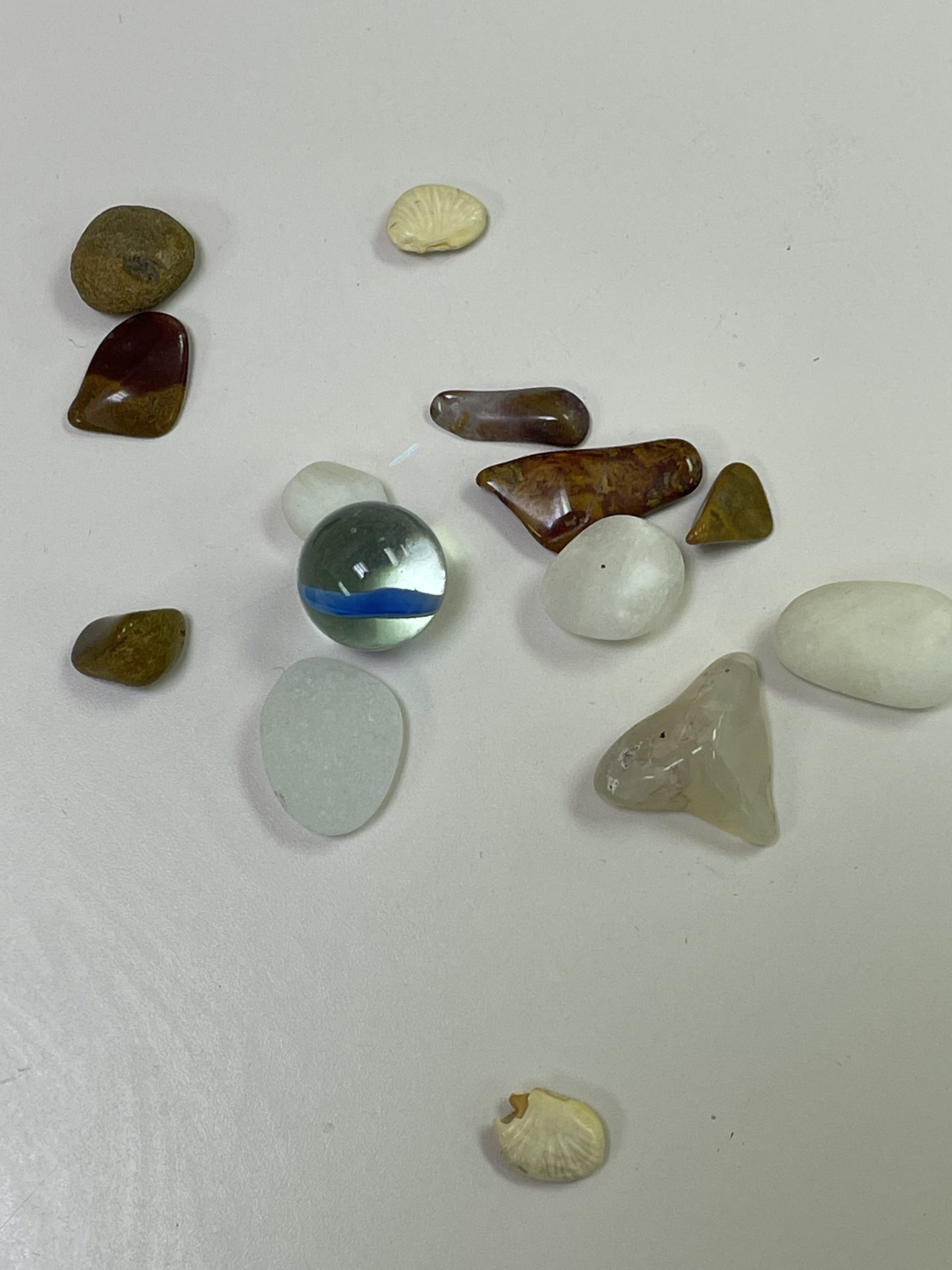
It doesn’t have to be
the blue iris, it could be
weeds in a vacant lot, or a few
small stones; just
pay attention, then patch
a few words together and don’t try
to make them elaborate, this isn’t
a contest but the doorway
into thanks, and a silence in which
another voice may speak.
— Mary Oliver
They are no longer clouds
but brightly striped ribbons

blown free from packages
never quite opened
or worse
opened and neatly tucked away
in drawers that don’t easily open
seemingly safe
from any robber
any loss
any misplacement
and sadly
any use
These ribbons don’t know of a wind
that’ll wave back
in the harshest or gentlest of breezes
no matter how much
mind
you pay them
They dwell in sunlight
and more of an ahhhhhhhh
to any sunset
if but noticed
But for a Now
This Moment
recognized
so briefly
like confetti

gone in a sudden burp of air
They are seen
as a Comma
in a Pause
that refuses to be left behind
before a never ending sentence
ahead
T H I S
inspired
T H I S
It’s ugly
at first look
and first looks aren’t always reliable
or completely understood
Strips of love messages
that dangle into unjumbled knots
as we look at them
through unfocused eyes that see clearly
but not always plainly
The messages
that shout with voiceless whispers
and convey what no other missive
can share
Any communication of love
will leave an eye dampened
with a saltless tear
that neither drips or wipes away
leaving a stainless mark on the soul
We carry
most secretly until we meet
in a place that’ll never be described
understood
with a last breath here
and the first breath in the beloved
T H E R E N E S S
that brings us all together
in an ahhhhhhhhhh
of complete
Beautiugly Shaggy Wreath
w a y
Throughout history, people have stood on two sides of a fence…
Either they have felt alone and powerless to change their future. They’ve felt that one person just can’t make a difference in the world.
They’ve asked the question, “What can I do?” and answered it with “Nothing. I’m just one.”
Then there’s the people who have believed in the “Power of One…”
People like Mahatma Gandhi, Rosa Parks, Martin Luther King Jr., Jesus Christ, Mother Teresa, Nelson Mandela, and more.
These people have realized that one single person with a vision, purpose, and commitment can in fact start a movement and change the world.
These people asked the question, “What can I do?” and they answered it with actions, words, and the ability to inspire others to join their purpose and mission.
The hope is that this Caring Catalyst inspirational video, “The Power of One,” inspires you to always try and be in that second group of people.
You have the power of one.
You have the power to make a difference. . .
BUT WILL YOU?
Hmmmmmmmmmmmmmmmmmmmmmmmmm
The thing about
H A P P I N E S S
is that it’s not always H A P P Y. . .
Reveals More Sadness
and More Kindness During COVID-19
KIRA M. NEWMAN, is the managing editor of Greater Good. Her work has been published in outlets including the Washington Post, Mindfulmagazine, Social Media Monthly, and Tech.co, and she is the co-editor of The Gratitude Project. and she helps us see that not all HAPPINESS is HAPPY
When bad things happen—wars, pandemics, shootings—the optimists of the world tend to turn their attention to all the goodness that still exists: the heroic fighters, the frontline workers, the givers and the helpers. But are we just deluding ourselves?
Not if the 2022 World Happiness Report is any indication. Although the pandemic has certainly caused division, there has also been a sizable increase in helping, donating, and volunteering across the globe—so big that the researchers are calling it a “pandemic of benevolence.”
“All must hope that the pandemic of benevolence will live far beyond COVID-19,” write the University of British Columbia’s John F. Helliwell and his coauthors. “If sustainable, this outpouring of kindness provides grounds for hope and optimism in a world needing more of both.”
The World Happiness Report is based on the Gallup World Poll, which surveys around 1,000 people per country in nearly 200 countries every year. The key question, used to create a ranking of the happiest countries in the world, asks people to evaluate their life as a whole on a scale of 0-10, from the worst possible to the best possible. This year, the United States climbed from #19 to #16 in the world, just below Canada and Germany. The top 10 happiest countries were the following:

The Gallup World Poll also asks questions about whether people helped a stranger, donated, or volunteered in the past month. According to the report, the “pandemic of benevolence” began in 2020, with more people helping strangers than in the several years prior. That number continued rising in 2021, alongside more people donating and volunteering, as well. Comparing the several years prior to the pandemic to 2021, the average number of people per country who donated increased from 30% to 37%, while volunteering increased from 19% to 23% and helping strangers increased from 48% to 69%. This trend is even more striking given that, before 2020, charitable donations had been on a long-term decline globally.
The uptick in kind, helpful behavior happened in every region of the world, from North America to Southeast Asia to the Middle East and North Africa. Those increases were particularly high in places that had previously lagged on “prosocial” behavior, like Eastern Europe.
While kindness increased in 2020-2021, people around the globe didn’t actually become less satisfied, according to their evaluations of life as a whole. It’s possible that this global wave of caring may have protected our well-being during the pandemic, the researchers suggest.
“Since this sometimes comes as a surprise, there is a happiness bonus when people get a chance to see the goodness of others in action and to be of service themselves,” the researchers write. Several studies conducted during COVID support this interpretation, finding that giving to others, offering support, and volunteering boosted people’s positive feelings.
Not all of the World Happiness Report’s findings around COVID were so uplifting. For example, we did feel more sadness and many report having fewer and fewer people to count on as the pandemic went on. In line with other research, younger people seemed to have a harder time than their elders, experiencing more negative emotions.
But lately, there have been some signs of recovery. While we (particularly women) became more worried and stressed in 2020, we fared better on both in 2021. And through it all, we still managed to have positive moments—there was no change in the number of people who said they laughed, experienced enjoyment, or did or learned something interesting the previous day.
None of this is meant to minimize the extreme hardships and inequality that people have faced during the pandemic. The researchers acknowledge that the portrait they are painting may be slightly rosier than reality, thanks to the necessity of using more phone surveys, rather than in-person ones. These may not have reached the populations hit hardest by the pandemic: nursing home residents, the homeless, the parents who are too burned out to take a telephone call.
But—as in 2020—the story, at least from these data, is one of resilience. With a little help from each other, perhaps we are stronger and more adaptable than we think.