My Christmas wish is simple. . .
but so much more sincerely extended to you:
MERRY CHRISTMAS~~
may this time give more than Promised
and exceed all you expect
Who Cares - What Matters
It’s often called, THE SEASON OF LIGHTS and it’s more reflective than just a particular thought or some kind of spirituality or anything attempted to be contained in a religion.
Fact: WE ALL HAVE THE CAPACITY TO NOT JUST HOLD LIGHT, BUT TO SHARE IT.~~ and the biggest challenge of all just may be, WILL WE or better still. . . DO WE?
Your very next ACT determines the answer to that question. . .
SEE . . BE. . .FREE
that magnificent illumination the world desperately needs and you so absolutely have to share. . .
Holding a Light
means little
if you’re not will to share it. . .
So very, very
s i m p l y
Did you miss it?? Did you even see what you thought you were going to miss? Do you have a slightest idea of what I’m even talking about right now?
We have seen IT’S A WONDERFUL LIFE countless times ever since it came out in 1943 and when I watched it the other night I saw something that I’ve never seen in all the times that I’ve seen it and I don’t know about you, but I think it will make all the difference in the way that I celebrate Christmas this year and more importantly live every day live every day for the rest of my life in all the Christmases and years ahead.
Dare I say that it could just quite possibly be THE TWELVE WORDS of Christmas in addition to The Twelve Days of Christmas?
Did you see it when everybody was losing their minds and when Potter was making the deal of all deals; it wasn’t what was spoken. IT was what was hanging on the wall in George’s office, not so much as a motto, but a personal creed on how to live our lives. . .how to recognize what is important
And BA-BOOM~~ just like that there was a simple sign with the mere 12 words
Ahhhhhhhh. . .the 12 words that unnoticeably hang in the office of George Bailey that he obviously lived his life by. . .
TWLEVE simple words for TWELVE months that one year only last forever and every heartbeat that we have and more importantly~~GIVE!
So you see, here is the question, not just during the season of Lights, but the season of Giving which is not a Season really but a true lifestyle:
Do you live by these words. . . and now, the most important question of all. . .WILL YOU?
It might just be the difference between a Scary Christmas or a Merry Christmas that we always try to hold onto and never
quite can grasp. . .
Frank Capra did not find the idea for the angel in It’s a Wonderful Life through a moment of divine intervention or an encounter with a mysterious stranger. The real story is quieter, stranger in its own way, and rooted in a sequence of small accidents that changed film history. It began in 1939, with a frustrated writer named Philip Van Doren Stern, who couldn’t get his short story published. He had written a tale called “The Greatest Gift,” the story of a man who wishes he had never been born and is shown the value of his life by a supernatural visitor. Magazine after magazine rejected it. Editors praised the charm and message, but they didn’t know where to place it. Stern found himself holding a story he believed in, but with nowhere for it to go.
So he did something unusual. He printed 200 small copies of the story as a Christmas booklet and mailed them to his friends and colleagues. What he couldn’t have predicted was that this humble, homemade gesture would eventually shape one of the most beloved films ever made. One of those pamphlets passed from hand to hand until it reached RKO Pictures. The studio bought the rights, then immediately got stuck. They tried multiple drafts, none of which captured the emotional core of Stern’s story. The project stagnated. The booklet sat on a shelf—quiet, unassuming, forgotten.
Everything changed when Frank Capra returned from World War II in 1945. He came home physically drained and emotionally shaken, unsure whether Hollywood stories could still matter after everything he’d witnessed. He admitted, “I needed a story that meant something. Something human.” When RKO, eager to clear unused properties, handed him Stern’s forgotten booklet, Capra read it in a single sitting. The effect was immediate. “I knew right away—this was the story,” he later said. “It was simple, profound, and spiritual without telling anyone what to believe.”
The angel was already present in Stern’s original story, but only as a shadow of what Clarence would become. Stern’s figure was more mysterious, less humorous, and served mainly as a narrative device. Capra saw potential in this character, but he wanted someone warmer, gentler, more disarming. He said, “I didn’t want an angel out of marble.
I wanted an angel with wrinkles, with worries, with a heart.” This became the defining insight. Capra felt that the message of the story—that every life touches countless others—would land more softly and more powerfully if delivered by a flawed, earnest, almost childlike guardian.
Working with his team of writers, Capra reshaped the angel into Clarence Odbody: a lovable, slightly bumbling spirit who still hadn’t earned his wings. He believed audiences would trust Clarence more if he wasn’t perfect. “An angel who needs help,” Capra joked, “is often the right one to help us.” When Henry Travers was cast as Clarence, Capra felt an immediate calm. Travers brought a humble sweetness that perfectly matched the director’s vision. Capra later said, “He gave Clarence something the script had no words for—kindness.”
As he built the character, Capra infused him with his own post-war emotions. He had seen despair, seen men lose faith in themselves, and he wanted Clarence to stand as a quiet rebuttal to that darkness. The angel wasn’t just a plot device. He was the embodiment of Capra’s belief that no life is meaningless, no matter how ordinary. “The world had too much cynicism,” Capra said. “I wanted to put a little hope back into it.”
Though the film struggled financially upon release, Clarence quickly became one of the most beloved angels in cinema. It wasn’t because he was grand or powerful, but because he was gentle. He represented the small voice people rarely hear—the reminder that they matter. Capra often credited Stern for planting the seed. “Philip Van Doren Stern gave me the gift,” he said. “I only unwrapped it.”
In the end, the idea of Clarence didn’t descend from heaven. It traveled through mailboxes, rejection letters, studio drawers, and one director’s aching heart before becoming the angel who would save George Bailey, and countless viewers, for generations to come.
Psssssssssssssssssssssssst. . .
Maybe there’s a little CLARENCE in all of us
with a George Bailey waiting to be saved. . .
(with the best gift of all awaiting to not be given but continually unwrapped:
K I N D N E S S)
Over these past few days, once again, with shootings and senseless murders, we are reeling and that’s without are own personal snow globe worlds being shaken this way and that way leaving us feel anything but SETTLED. . .

It’s kind of amazing isn’t it, just when you think you have it all figured out and you know the actual reason for something because that’s always been the reason. . .
Well, then you don’t so much discover so much as a meaning finds you and that’s what the tale of this mustard seed, isn’t it?
No matter how broken we are, especially when we feel the most smashed, obliterated and shattered. . . it’s then we kind of know that we’re not alone, that there is not one person who has a pulse, who’s reading these words right now, who is undefeated. . .it just may be
THAT IS our super power with the keyword being “WE”
In OUR brokenness, we must surely know we are not alone. . . that’s quite the power of the tiny mustard seed. . .and its own way a mountain just got moved, didn’t it?

REMEMBER: EVEN THE BROKEN PIECES GLITTER

I know that the past few days have been very difficult to endure, on top of everything we are already holding. Yet I keep coming back to a quote from the German poet Rainer Maria Rilke: “Let everything happen to you, beauty and terror.” It is one of the hardest things I know to practice, and a seemingly impossible task some days as I share in the poem below, another little mustard seed of hope by one of my favorite poets, James Crews
Let Everything Happen to You
You have a habit of walking past beauty,
feeling virtuous for noticing, for instance,
snow piled at the tips of the gone-to-seed
butterfly bush like a second, unexpected bloom,
or like tonight when you passed through
the hallway at sunset and found the golden
light reaching through bare branches to touch
the geranium in the window, leaves fanned out
like little hands to receive. But this time, you
stopped and leaned against the wall to let it all
happen to you, to trace the shadow of the plant,
to watch this private show unfold. Be honest—
you had carried your cargo of sorrow all day,
the mass shootings, the couple whose lives were
taken by their own son, your back bent under
the awful weight. And you wanted to stay
in the glow of that otherworldly light, while
knowing: this is the only world we have.
That’s when you wept, remembering the man
who wrestled the gun from a shooter, saving
countless lives. That’s when you noticed
all the spent red petals scattered on the sill
and floor, spread around your feet, as if to bless
this ground we walk each day, as if to say:
there is terror, yes, but there is also this.

Let’s continue to help each other HOLD LIGHT in the dark. . .
THE TRUTH
about this old parody song of Bob River’s
is that we dare say or even try to convince ourselves
that there are
JUST
12 Pains of Christmas. . .
Whatever other
P A I N
you may put on the list. . .
here’s hoping
EVEN NOW
(TEN DAYS AWAY FROM CHRISTMAS)
The Season
will give more than it promises
and whatever’s
e x P Ect e d
“In 1965, Charles Schulz, a devout Christian and creator of the Peanuts comic strip, was asked to create a Christmas special for CBS featuring the Peanuts characters. He agreed with one requirement: that they allow him to include the story of the birth of Jesus.
Although the stations executives were hesitant and tried to convince him otherwise, Schulz was insistent. As a result, for the past 50 plus years, millions of people have watched and “A Charlie Brown Christmas” and heard the story of Jesus and “what Christmas is all about.”
It wasn’t until a few years back that I realized a “hidden message” in the film. Linus, a child who seems to have some insecurities as he carries a security blanket with him at all times. In fact, Linus NEVER drops his blanket, except once….
While sharing the message of “what Christmas is all about,” Linus drops his blanket at the exact moment he says the words, “fear not!”
In this seemingly innocent moment, Linus delivers a powerful reminder of the true meaning of Christmas. We are to “fear not”, for Jesus is born. We needn’t rely on material things for security, we have God with us, “Immanuel”, (Matthew 1:23) Jesus Christ, our Lord and Savior – the true meaning of Christmas.
Awhile back, someone informed me, indignantly so, that Linus picks up his blanket at the end of the speech so my interpretation must be wrong. Well, he was right, Linus does pick up his blanket at the end of his speech. However, he “drops” it again later…
Amid big, bright, colorful, shiny artificial trees, Charlie Brown chose the least of these, a little, wooden tree with just a few branches. Shortly thereafter, Linus uses his blanket to wrap about the base of the tree and says, “Maybe it just needs a little love”. In that moment, the tree “awakens”, stands tall and firm. A reminder that no matter who we are, how many mistakes we’ve made, a “little love” can make all the difference.
Let’s strive to “fear not” (Luke 2:10) and “love one another” (John 13:34), not just at Christmastime, but the whole year through.”
SO. . >
We all have a little Charlie Brown Christmas tree mentality in us that we can’t quite decorate, don’t we? How about, maybe even it’s just for NOW, this time of the year, we admit it. . .acknowledge THE FEAR and maybe blanket it or not. . .we LINUS US and drop THE BLANKET, as we quietly whisper or boldly shout, “FEAR NOT!”
And maybe, just maybe in some 30 days or less when everything goes back into the box, your FEAR will find it’s way in there, too!
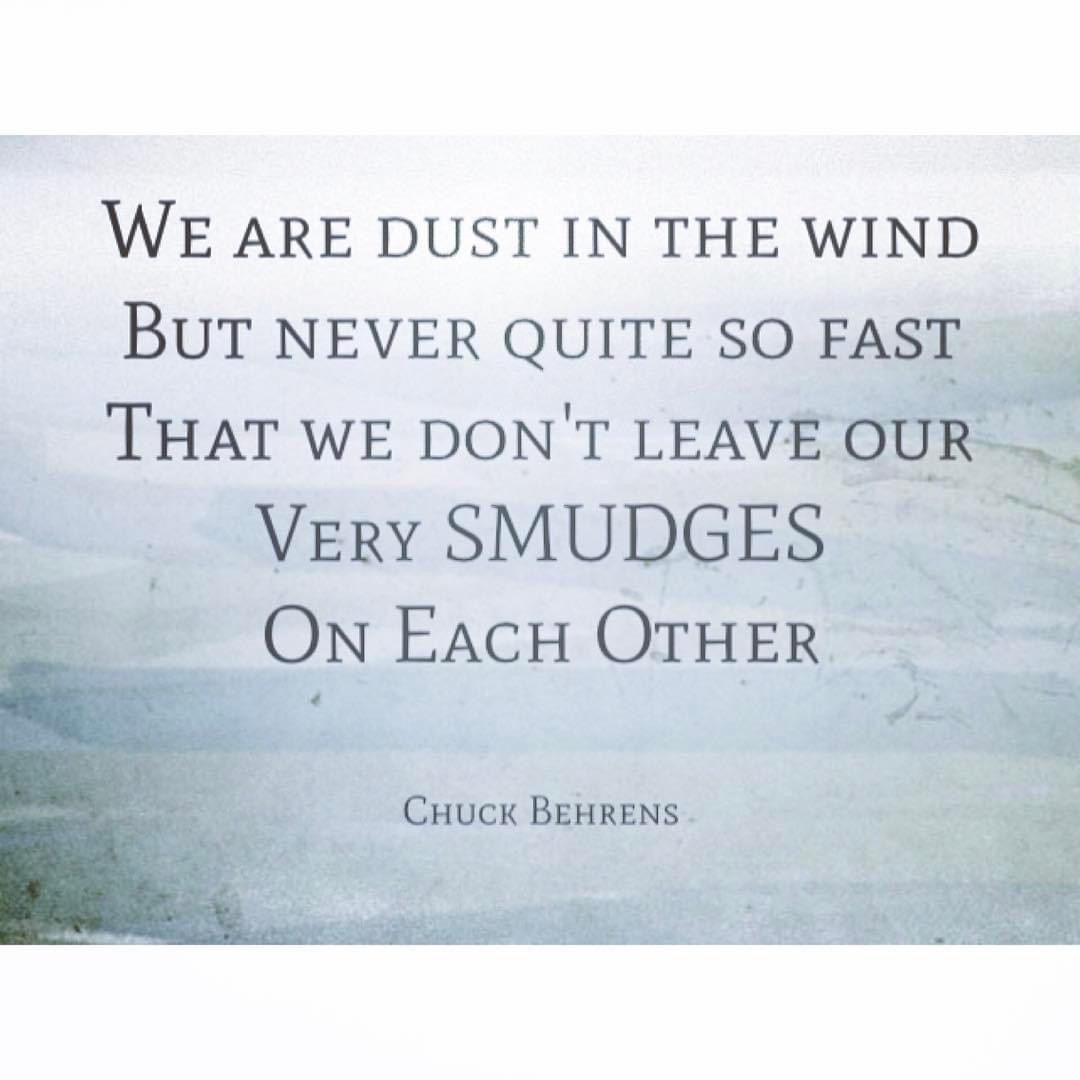
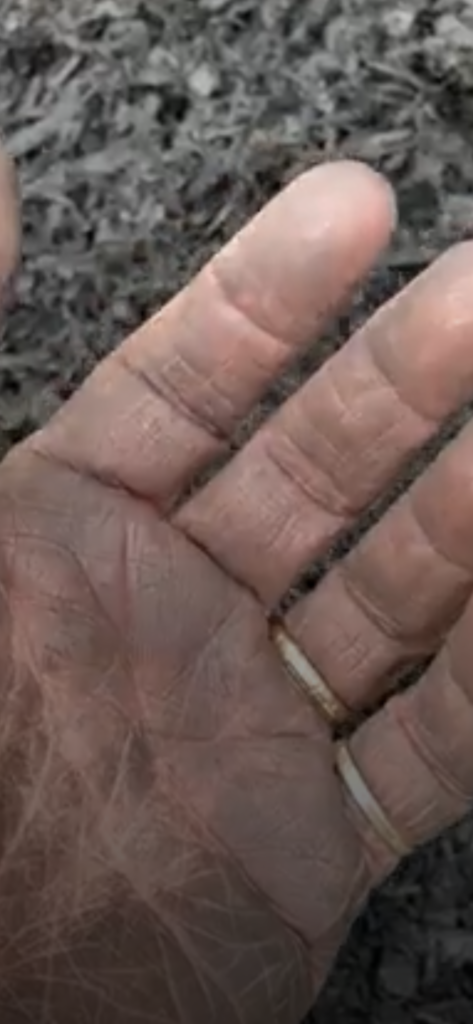
It’s almost downright offensive, isn’t it, WE ARE DUST, but this strong element of truth isn’t something that needs to be swept away or ignored, and certainly not even acknowledged. Some actually would go way back and wax philosophically that it’s the dust of the stars that are in our very DNA and who’s to argue. . . ?
We know that scientifically that’s somewhat true isn’t it? And yet who wants to be referred to or known as dust a particle or a pile of it?
I don’t think there’s too many hands would go up in that classroom we are all still very much a part; would yours?
So, how about we embrace the obvious: “IT IS FROM THE DUST OF THE EARTH WE COME AND TO THE DUST OF THE EARTH WE WILL RETURN”
It may be a matter of time for both, but that’s not a bad thing. In fact, that we existed all is a really. . .really good thing
TO BE
acknowledged and never hidden or. . .
Funny how we remember things, right? The only Chevy I ever owned was a Chevy Vega. It’s the one that I always wanted to forget that Iowned–It literally rusted out underneath of me me. The fenders rotted out, the exhaust was wired and clamped together with discarded tomato paste cans and I used ROLLS of electrical tape patching up radiator hoses and I had to park on a slope or else end up pushing the car just to jump start it because the clutch was long worn out; I think I had to Fred Flintsone it with my feet to get it to stop, because the floor board on my side rusted out; And yet the memories that I made in that car: Trips–travels back-and-forth from seminary to Home for Christmas are like none other as well as the weekly jaunts to my student-church with my secret weapon for being loved: My one year old daughter, Gina. . . Yeah, Memories are not the ones that we replace but the ones we continue to create because of the memories that we once had in n or out of any car.

What’ll get you up and down your Road
THIS HOLIDAY SEASON. . .?
TAKE THE TRIP
It’s still the best
JOURNEY
(especially when it’s taken together)
My body tries to convince my mind almost on a daily basis what my heart refuses to acknowledge: I AM GETTING OLDER. No, I can no longer run and I don’t walk at the pace that I used to even though it’s still a pretty good clip, and coming downstairs. . . Oh my, please turn away, and shield all small children from the sight; It’s not a vision that any eyes, young or old should ever have to witness. I don’t or can’t eat like I used to or else. . .And bodily functions, well now let’s not get too graphic, after all, it is a family oriented, kind of a blog, but. . .and here’s the thing, it’s not just me, Erin is in that boat that we’re trying to navigate, and yes, at times it takes all four hands and our achy backs to row, but it’s in unison and provides a TOGETHERNESS that feels like soft flannel just out of the dryer on cold nights but experienced more richly than ever in our 40 years together and now even more so when I read and share with you THIS:
💔 The Day Alan Alda Learned He Had Parkinson’s — And the Promise His Wife Refused to Break
Alan Alda remembers every detail of that afternoon in 2015.
The doctor had just said the words no one ever wants to hear:
“Parkinson’s.”
Alan didn’t cry.
He didn’t speak.
He just went home, sat in his favorite chair, and stared at his trembling hands.
A moment later, Arlene walked in.
“Alan… what did the doctor say?”
He looked up.
“Parkinson’s.”
Silence filled the room — heavy, terrifying, real.
Alan whispered, “I don’t want you to carry this. You’re almost 80. You shouldn’t have to take care of me.”
Arlene didn’t hesitate.
She lowered herself to her knees — slow, painful, but determined.
“Listen to me,” she said softly.
“Sixty-seven years ago, I promised I’d stay with you in sickness and in health. I didn’t say those words for decoration. I meant them.”
Alan blinked hard.
“You knew this day would come?”
“I knew we’d grow old,” she said. “And I chose to grow old with you. Parkinson’s doesn’t change that. Nothing changes that.”
For the first time since the diagnosis, Alan broke.
He covered his face and cried into the hands that had held scalpels on MAS*H, scripts on Broadway, and Arlene’s fingers for nearly seven decades.
“I’m scared,” he admitted.
Arlene took his shaking hands, kissed them, and whispered:
“I’m scared too.
But I’m not scared of the disease.
I’m scared you’ll think I’ll ever leave your side.
And I won’t. Not now… not ever.”
That night, Alan finally slept — not because the fear was gone, but because Arlene had reminded him of something stronger:
See–Love doesn’t disappear when the body trembles.
Love holds tighter. . .
Sometimes this Advent and Christmas Season, we will be lighting a candle, symbolizing LOVE. Now to be sure, it’s a candle that once lit will flicker and offer a small, beautiful glow and a comforting warmth, but it will be extinguishable. . .so very much unlike the dearest, sincerest, warmest–the most vulnerable love that we carry around in sickness and in health, to love and a cherish, all the days of our lives and just a tad bit more of eternity following. . .