When the rain falls
it gathers in the potholes
the dipped
not so evenly carved out
valleys
deep earth scars
that hold it
more tenderly
than Angel hugs
until unnoticed
drop by drop
they evaporate in a
Sun’s Shine
that can never be imagined
only experienced
so that it wishes
for yet another time
when the rain falls

GOOD HAS COME
We most likely won’t be able to know for years to come
and yet there’s some things we know implicitly every day
since the COVID19 Pandemic has begun nearly 2 years ago. . .
GOOD HAS COME
There are Many Ways We Helped Each Other During COVID
A new study explored what altruism looked like during the pandemic and how we might encourage more altruism in the future.
When the pandemic first came to California and lockdowns were instituted, many of Jill’s neighbors set out to help each other. Some called elderly neighbors to be sure they were OK. Others collaborated with local restaurants to create a low-cost food delivery service, feeding people around the city while helping restaurants find a source of income during closures. Still others began a drive to collect masks for essential workers.

These acts of altruism that seemed to be a common GOOD that spread across the World. But what motivated some neighbors to step up to do this, while others didn’t? And is altruism enough when it comes to disaster relief?
Those were the questions at the heart of a new study published in Analyses of Social Issues and Policy.
To better understand how altruism emerged during COVID-19, the researchers analyzed 104 stories of altruism appearing in major newspapers and blogs that were compiled by Ball State University between April and October 2020. They wanted to see if any themes emerged around who the helpers were, why they stepped up, whom they helped, and what kinds of help they offered. The ultimate goal was to paint a picture of how people ally with each other when disaster strikes and how they expand their sense of community.
“We were trying to understand how people come together,” says lead author Selin Tekin. “We wanted to know what kind of strategies people used to support each other and how the wider community can support those most affected.”
While some of the stories she and her team analyzed came from different parts of the world—India, Australia, and England, for example—the majority came from the United States, so the results are somewhat American-centric. But the stories do give a picture of a phenomenon that’s frequently seen when disaster strikes.
“A sense of community often appears in disasters when there are not adequate responses from the authorities or the government, or when there are contradictory messages from the government,” says Tekin. “Community members come together and share whatever resources they have.”
How people stepped up during COVID
Here’s what Tekin and her colleagues found when analyzing the stories. . .
Who helped. Many people who helped others during the pandemic belonged to organizations, associations, and faith communities that generally provide help to others, although some were volunteers who spontaneously decided to help. And many were economically or physically advantaged.
It makes sense that organizations set up to provide assistance would do so during the pandemic, and many did, including Catholic Social Services of Alaska, for example. When it became clear homeless people in Anchorage would be at risk of catching COVID in crowded shelters, the organization searched for private places for homeless people to live and helped move them into safer quarters.
Others stepped up once they became aware that certain groups were disproportionately impacted by COVID. Those with greater economic resources gave more generously, while younger people tended to offer their labor. As an example, one Yale college student and his friend put together a group of 1,300 volunteers in 72 hours to deliver groceries and medicine to older New Yorkers and other vulnerable people.
Many people volunteered spontaneously, too, after seeing a pressing need. At one petrochemical plant, 43 employees volunteered to work 12-hour shifts for a month just to produce raw materials needed for face masks and surgical gowns. This kind of volunteer spirit was similar to what I saw with my neighbors—a response that is fairly typical, according to Tekin.
“There are always volunteers who are willing to help their communities,” she says.
Why people stepped up to help. The main reasons people chose to help were that they felt an emerging sense of identity with those most affected by COVID, they wanted to be an ally of disadvantaged groups, and they felt grateful for those risking their own health to help.
Research has shown that those who have a strong sense of “we are in it together” are more likely to help in a crisis than those who don’t, and that was true during COVID, too. In many instances, people expressed feeling a sense of identity with those who were suffering. For example, one artist in Los Angeles sent thousands of paintings of flowers to health care workers in New York City to let them know, “You’re loved by millions of people you’ll never meet. You’re not a stranger to anyone.”
There were also many examples of people wanting to help the disadvantaged. One café owner in Australia withdrew 10,000 Australian dollars from his bank and gave out $100 bills to people standing in line for the social security offices. In India, a group of womenbegan cooking extra food for immigrant workers who were suffering during the lockdown.
In other cases, people wanted to express their thanks to those who were doing essential work during the pandemic. One neighborhood in Miami Beach organized an early-morning surprise for their garbage collectors, lining their street with people holding up signs and putting together gift bags, cards, and presents as a token of their gratitude.
Who was helped. The people most targeted for altruistic help were the elderly, those with health conditions or disabilities, essential workers, working-class people, or marginalized social groups.
For example, many store owners created special store hours when only the elderly or disabled could shop to reduce their risks of getting COVID. One woman created a mask that had a clear, plastic window over the mouth so that people who are deaf or hard of hearing could still use lip reading to understand those around them. When food insecurity rose during COVID, the FarmLink Project stepped up to deliver food that was being left unused at farms, delivering almost 240,000 pounds of food to food banks, and paid wages to farmworkers and other workers affected economically by COVID.
How people were helped. People provided material help, support for psychological or physical well-being, and social-emotional support.
Some people donated money, cooked and distributed food, or ran errands for those who couldn’t leave their house. Others distributed masks to those who had trouble procuring them or offered free counseling services to those suffering emotionally. Still others made calls to lonely, isolated folks or participated in rituals aimed at thanking health care workers on the frontlines (like clapping from their balconies).
Of all of these findings, the latter surprised Tekin most. “I was fascinated by how, even if people can’t give any kind of material support, they show their gratitude; they show that they’re aware of the support that they are receiving,” she says.
She notes many working-class and ethnic minority populations were disproportionately affected by the pandemic and didn’t receive an adequate response from authorities. So, it was heartening to Tekin to see that, when confronted with an outside threat, people can choose to help, whether or not government authorities intervene.
“People share an emergent identity, a human identity,” she says. “Here, we saw people with more financial or material resources willing to share with the disproportionately affected. It wasn’t surprising, exactly, because we’d seen this in previous research. But it’s always interesting.”
Lessons for times of crisis
All in all, these patterns show that in a crisis, people do often step up to help one another. This is good news that can be obscured by news reports of less ideal behavior—like hoarding toilet paper or jumping the line for vaccinations. When there is a sense of common humanity—that we’re in it together—it can encourage more people to feel more moved to help.
“Even though the system is not structured in a way that everybody can receive the same amount of resources under the principles of equity, community members can come together and support each other,” says Tekin. “People just need to be aware of that.”
On the other hand, our altruistic impulses are not enough, says Tekin. As the pandemic drags on, people’s enthusiasm to give tends to wane, even though the need continues. To combat that, it’s incumbent upon community aid groups and government agencies to provide support to those who continue to suffer disproportionately, she says.
“You need change at the systemic level—policies that deal with injustice or that help community aid groups to be more sustainable, because they are usually the people who know their communities best,” says Tekin.
In the meantime, it’s good to see that people are usually capable of expanding their circle of care and stepping up to help.
“Though there is a gap between the advantaged and disadvantaged, there’s also support,” says Tekin. “People don’t always know what to do to help, but they’re willing to do something.”\
NEEDLESS TO SAY
usually means
WE HAVE TO SAY IT CLEARER|
L O U D E R
OR NOT. . .
which is the not so subtle difference between
GOOD HAS COME
Or. . .
it’s still far off
on it’s way
JUST A BUS RIDE
W H E N
is a
BUS RIDE
much more than just a
B U S
R I D E. . .
Pssssssssssssssssssssssssssssssssssst:
(not just when you make it one)
WHEN YOU REALIZE
K N O W
that it is. . .
Sometimes the greatest ride
is when you realize
you’re not alone
(and one you love makes it a beautiful journey)
SOME WORDS NOT OUR OWN
THERE ARE SOME WORDS
NOT MY OWN
THAT SAY SO MUCH MORE
THAN I COULD EVER WRITE
OR SAY
B U T
need to read or hear
than any that could bounce around in my head
or spill out of my pen
L I K E:
my brain and
heart divorceda decade agoover who was
to blame about
how big of a mess
I have becomeeventually,
they couldn’t be
in the same room
with each othernow my head and heart
share custody of meI stay with my brain
during the weekand my heart
gets me on weekendsthey never speak to one another
– instead, they give me
– the same note to pass
– to each other every week
and their notes they
send to one another always
says the same thing:“This is all your fault”
on Sundays
my heart complains
about how my
head has let me down
in the pastand on Wednesday
my head lists all
of the times my
heart has screwed
things up for me
in the futurethey blame each
other for the
state of my lifethere’s been a lot
of yelling – and cryingso,
lately, I’ve been
spending a lot of
time with my gut
who serves as my
unofficial therapistmost nights, I sneak out of the
window in my ribcageand slide down my spine
and collapse on my
gut’s plush leather chair
that’s always open for me~ and I just sit sit sit sit
until the sun comes uplast evening,
my gut asked me
if I was having a hard
time being caught
between my heart
and my headI nodded
I said I didn’t know
if I could live with
either of them anymore“my heart is always sad about
something that happened yesterday
while my head is always worried
about something that may happen tomorrow,”
I lamentedmy gut squeezed my hand
“I just can’t live with
my mistakes of the past
or my anxiety about the future,”
I sighedmy gut smiled and said:
“in that case,
you should
go stay with your
lungs for a while,”I was confused
– the look on my face gave it away
“if you are exhausted about
your heart’s obsession with
the fixed past and your mind’s focus
on the uncertain futureyour lungs are the perfect place for you
there is no yesterday in your lungs
there is no tomorrow there eitherthere is only now
there is only inhale
there is only exhale
there is only this momentthere is only breath
and in that breath
you can rest while your
heart and head work
their relationship out.”this morning,
while my brain
was busy reading
tea leavesand while my
heart was staring
at old photographsI packed a little
bag and walked
to the door of
my lungsbefore I could even knock
she opened the door
with a smile and as
a gust of air embraced me
she said“what took you so long?”
~ John Roedel (johnroedel.com)
were spoken first by
Someone Else
and echoing intimately within us
For An Ever. . .
ALL DAY SUCKERS
that deliver more flavor
that can be promised
. . .only enjoyed
YOU: A (S) HERO
Most of the time
we don’t see ourselves as
(S) HEROES
TAKE A CLOSER LOOK

Photo by Andrea Piacquadio on Pexels.com
We often look to do the EXTRAORDINARY
instead of just taking the ORDINARY
and bringing our
E X T R A
to it. . .
NOW THAT’S TRULY (S)HEROIC
It’s all that’s necessary. . .
Not just
YOU BEING YOU
but simply bringing your
YOU-NESS
to the moment before you. . .
Yeah,
(S)HEROIC
YOU:
A (S) HERO
YOUR ASSURANCE POLICY
IT USED TO BE
that Beer Commercials were the best
b u t
INSURANCE COMMERCIALS
now offer
way more than
I N S U R A N C E
There’s a lot of things that can go wrong in life. . .
Unfortunate things and difficult experiences
are happening every day
all across the world. . .
That’s just part of
L i F e
And it never has to
stop us
from living
The Good Life. . .
The courage to live —
not in spite of those difficulties,
but rather regardless of them–
is what makes the good life possible.
(perhaps even because of them?)
So. . .
Tell me about YOU
SHOW US
Your ASSURANCE POLICY
. . .It’s so much more than
A Commercial
. . .and it never has to be Purchased
or has an expiration date
BROKEN PIECES
Our Broken Pieces
never cut
wound
or cause scarsThey are incisions
in the soul
that never need a
stitch or a stapleThe closing
would be the
worst injury
of all
S h A t T e R e D
escapes it
IT SO IMPORTANT
TO KNOW
RE-LEARN
S H O W
to be more of
A CARING CATALYST
than ever before
(EVERY BROKEN PIECE OF YOU)
GETTING YOUR COURAGE ON
We have all kinds or reasons
N O T
to have courage
and one of them is not having all of the
A N S W E R S
when answers themselves
can only be found by
L I V I N G
out our scariest
Q U E S T I O N S
so in the middle of all of this,
we get a little peek from
Amy L. Eva, Ph.D Ph.D., who is the associate education director at the Greater Good Science Center. She writes for the center’s online magazine, facilitates the Summer Institute for Educators, and consults on the development of GGSC education resources. With over 25 years in classrooms, she is a teacher at heart. She is fascinated by neuroscience, the psychology of learning, and adolescent development and has spent the last 12 years as a teacher educator. She advocates for Six Ways to Find Your Courage During Challenging Times
Courage doesn’t have to look dramatic or fearless.
Sometimes it looks more like quiet perseverance.
“We teach who we are,” says educational philosopher Parker Palmer.
Early in Amy’s teaching career, she participated in a series of retreats led by the Center for Courage and Renewal, inspired by Palmer’s book The Courage to Teach. Palmer reminds us that our sense of self plays out in our work every day—and living with courage and integrity means finding balance and alignment between our inner and outer selves. In other words, our identities, values, and beliefs inform the selves we bring to others.

But how do we find the courage to stand up for our coworkers, students, neighbors, family and friends, and ourselves amid exhausting and unprecedented challenges?
Understandably, there are days when you feel emotionally weary, inept, and cynical—all characteristics of burnout. However, I’m finding that the science of courage offers a psychological lifeline, helping us to clarify what really matters so that we can find a steadier, values-based resolve—and even inspire it in others. I dove into the courage research with teachers in mind, but these tips are for everyone.
Fortunately, courage comes in many forms. Although definitions range, researchers tend to agree that it features three primary components: a risk, an intention, and a goal that may benefit others. In a classic example, a student defends a peer who is being verbally assaulted by a bully, by interrupting the bully and telling them to stop. This purposeful act may come at a cost—perhaps socially or physically.
But courage doesn’t have to look dramatic or fearless. We express it in both bold and quiet ways. In fact, “general courage,” the confident or seemingly brazen actions perceived by others, differs from “personal courage,” those actions that are courageous in the minds of the actors themselves. It all depends on how you view the challenge in front of you and the fears associated with performing a particular behavior. In other words, these days, some of us may need significant “personal courage” to get out of bed and face the day on behalf of those students we value and care about.
Why is just showing up courageous? Daily stressors can pile up, leading to emotional exhaustion, a sense of detachment from your work, and the feeling that you simply aren’t as capable as you thought you were—and if you don’t feel capable, you may not feel particularly confident. Yet courage is also associated with other positive character strengths, like persistence and integrity.
The good news is that there are many ways to tap into our capacity for courage, whether we are adults or students. Here are six.
1. See yourself as courageous
First, if we describe ourselves as “courageous,” we are more likely to act courageously. In other words, if I tell myself that I’m a courageous person as I park in the school parking lot and walk into my school, it may actually give me a psychological boost and inspire me to meet the day with greater self-assurance.
Alternatively, we can take time to note and label all the courageous actions we have already taken in our lives. For example, when you consider how your childhood struggles inform your current relationships with coworkers or students, or how you made it through college as a single mom, or how you’ve learned to cope with a chronic health issue, you may be more likely to experience positive emotions while reconnecting with personal values and beliefs that can inspire future courageous behaviors.
Consider conducting an inventory of past actions with your students or colleagues so that you can identify and celebrate individual acts of courage together. Then, discuss how those actions influence who you are now and who you want to be.
2. Get comfortable with “mistakes”
We can recognize and celebrate courage with others, but it can also be a very internal, day-to-day experience. One of the most common ways we practice courage at work is in our pursuit of learning and personal growth. Research tells us that fear of failure can negatively correlate with courage, but what if it’s OK to make mistakes—and they are even welcomed learning tools?
Studies indicate that students may benefit from making mistakes (and correcting them) rather than avoiding them at all costs. And when researchers reviewed 38 studies of resilience in response to failure, errors, or mistakes, they found that more resilient individuals had lower levels of perfectionism and a more positive way of explaining past events: “I haven’t solved this long division problem yet, but I’ll try another strategy next.”
Another way to address fear of failure is through a simple practice you can share with your students or colleagues called “Crumpled Reminder,” where you write about a recent mistake you made, crumple up a paper representing your feelings about that mistake, and then discuss the ways mistakes strengthen brain activity and help us to learn and grow.
Rather than fearing looming “failures,” seeing daily missteps as opportunities for learning frees all of us to appreciate learning for what it is—a process rather than a performance.
3. Keep trying
Courage at work also requires perseverance. As our fears lessen, we are more likely to persist in learning—to keep trying despite the obstacles ahead of us. And perseverance (or persistence), as a character strength, can also be modeled, observed, and developed. In fact, when adults model persistence in working toward a goal, infants as young as 15 months tend to mimic that behavior.
As teachers, we have a lot of power to influence our students’ efforts by sharing our own vulnerabilities while we read a challenging text, our own self-conscious emotions as we outline a timed essay, our stops and starts while solving a word problem, and our commitment to keep going.
And research suggests that teachers’ growth mindsets, or belief that intelligence grows and changes with effort, can be linked to the development of students’ growth mindsets. This more positive, flexible mindset can improve students’ performance at school, boost their well-being and social competence, and even promote kind, helpful, and prosocial actions. All these benefits may bolster our capacity for courageous actions, too.
4. Look for the heroes
Of course, if we are feeling apathetic, anxious, or fearful about stepping up and doing that next best thing at school or in life, it can be helpful to draw inspiration from others—whether near or far, real or fictional.
According to research, the individuals we admire may represent some aspect of our ideal selves as they demonstrate moral courage through difficult times and a desire to do good in the world. They can also inspire us to live more meaningful lives. Studies suggest that seeing images of heroes may move us to sense greater meaning in our lives—and even increase our drive to help others.
Basic social cognitive theory tells us that we are motivated through “vicarious experiences”—as we witness others’ actions. In fact, when adults observe courageous behaviors in their workplaces, like a teacher standing up for a group of students or a colleague advocating for an important policy, they are more likely to see the potential for organizational change and feel inspired to act courageously themselves.
Our students can benefit from models of courage, too. In the “Who Are Your Heroes?” lesson from Giraffe Heroes Project, students listen to and present hero stories, while exploring the risks and benefits of courageous acts. Stories like these can communicate shared values, make us more empathic, and may encourage us to help others.
5. Clarify your values
You may recognize heroism or courage in others, but sometimes struggle to see it in yourself. If so, it may be helpful to ask yourself a few key questions:
- What do I value in myself?
- What do I “stand for”?
- What is important to me?
- What are some of my successes and accomplishments?
When researchers measured teachers’ responses to prompts like these, they found that teachers’ anxiety immediately decreased—and they experienced more positive emotions over time when compared to a control group. Teachers’ values drive their goals and behaviors at school, while supporting their well-being and a sense of self-efficacy at work. If we feel clear and capable, we may also feel more courageous.
Philosophers consider courage to be a foundational virtue because it guides us to act on behalf of other virtues or values. In fact, our convictions, values, sense of integrity, honor, and loyalty can all influenceour courageous actions. When we experience a threat to our moral code, we are likely to act in a way that upholds our beliefs and values. And the more powerful the belief, the more likely you will not be influenced or swayed by those around you.
You and your students can clarify your values and explore your character strengths through a range of simple practices for both adults and students, like Discovering Your Strengths and Talents, Eight Inner Strengths for Leaders, and Reminders that Encourage Moral Character Strengths.
6. Become part of a social force for courage
Finally, we can act on our values in community. After more than a year of isolation from each other—and the prospect of ongoing public health, environmental, and sociocultural crises—we are finding courage again in groups.
Visit Greater Good in Education for more information, tips, and practices to support teacher and student well-being. To dive deeper into the research behind these practices and strategies, register for one of our online courses for educators.
Teachers and students are participating in social and emotional communities of practice, circles of courage, and other “circles” practices to nurture a sense of belonging, find emotional support, and engage in collective action. Studies indicate that social groups like these promote interdependence, social identity, and cohesion and influence courageous behavior, too.
And one of the most empowering things we can do for our students right now is to support them in being courageous community problem solvers, too.
Tribes Learning Communities curricula focus on active learning and community building among adults and students to reduce violence and increase kindness. For example, in their lesson “Put Down the Put-Downs,” students consider how hurtful name-calling really feels and brainstorm ways to end the problem in their classrooms and school. In this case, perspective taking and empathic responses can lead to more courageous and impassioned student action, cultivating a positive school and classroom climates where everyone is honored and valued.
Further, in the lesson “It’s Up to Us to Stick Our Necks Out,” students share stories about everyday heroes drawn from a free story bank, and then learn to “Be the Story” by selecting, planning, and enacting a service learning project to address a community challenge (such as homelessness, clean air or water, or a need for increased literacy). As we act on our values together, we may feel a greater sense of agency in a world that feels topsy-turvy right now.
During those dark, winter mornings when you really don’t want to crawl out of bed and face the day, remember that courage can also be a very private, personal act. There will always be risks and challenges to face, but what really matters most—in your gut? Is it love, learning, curiosity, compassion, hope? How do these values inform who you are and how you show up in the world?
These are the key questions that can help us to frame our truest intentions—even on our most difficult days.
C O U R A G E
is the greatest
ERASER
for Fear
and it’s easily applied
BY JUST SHOWING UP
and
GETTING YOUR COURAGE ON. . .
It’s not always easy
but
ALL-WAYS
Worth It
GROWING OLDER
T H I S
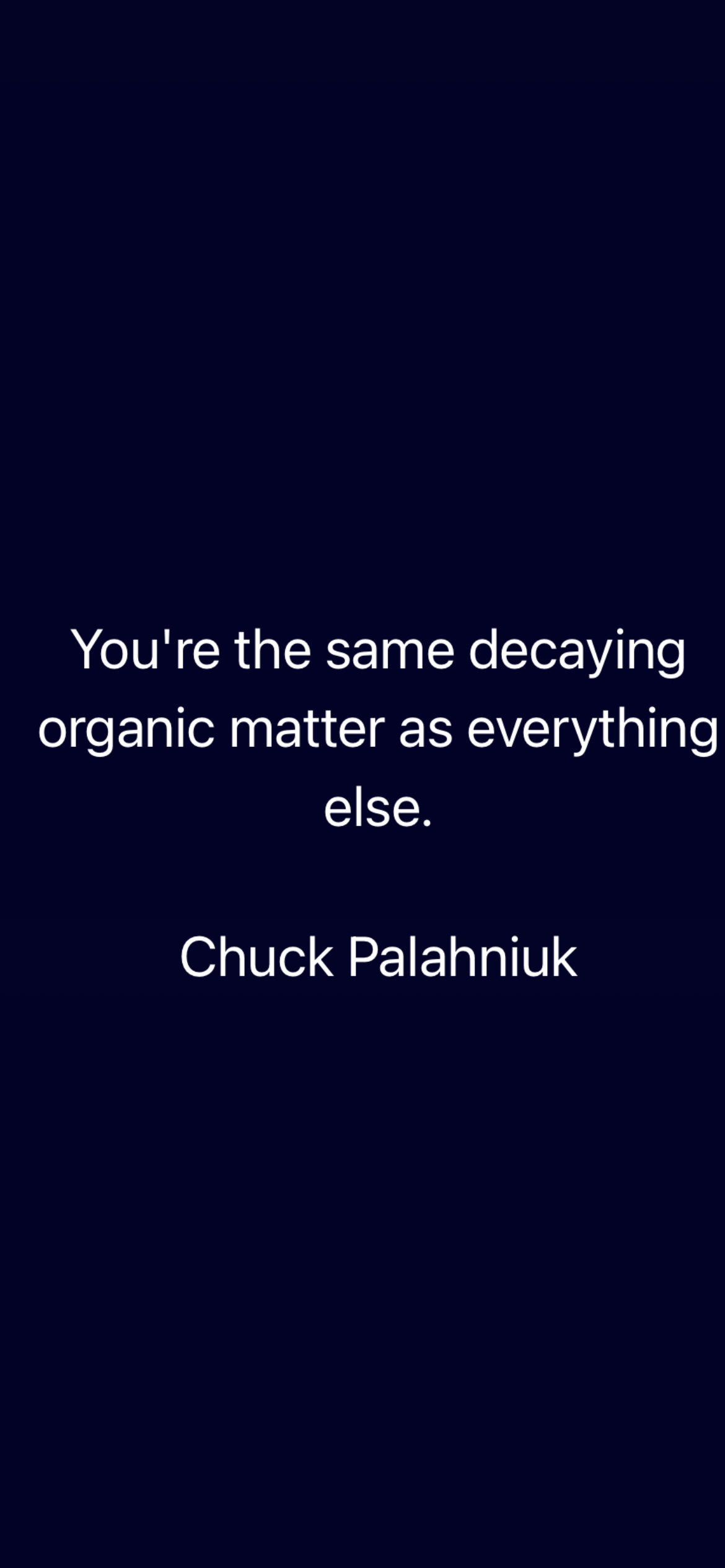
quote by Mr Palahniuk,
Author of the FIGHT CLUB
isn’t the nicest or classiest way
to open up
A Caring Catalyst
Monday Morning Blog
about growing older
which some equate to
d e c a y i n g
d y i n g. . .
It’s like choosing:
YOU LOOK LIKE THE FIRST DAY OF SPRING
or
THE LAST DAY OF WINTER
and sometimes
we’re not doing the choosing. . .
So kick back
breathe deep
and exhale loudly
as you
W A T C H
(I think you’ll agree, not just in this blog…but often THE ENDING is better than
THE BEGINNING)
BEYOND A SEASON
CHRISTMAS IS BARELY 48 HOURS PAST US
AS IT STRUGGLES ALWAYS
TO NEVER LEAVE US
or worse:
BE LEFT BY US. . .
Just what is it
that makes any Season
A Lifestyle. . .
BECOME THAT!
W A T C H:
LOVE IS A GIFT THAT GOES BEYOND A SEASON
BE THE CURE FOR SOMEONE’S LONELINESS
THE SYMPHONY IN YOU IS ONLY AS MAGNIFICENT AS YOU ALLOW IT TO BE HEARD AND EXPERIENCED
THAT FACE
which hides a Christmas Wish
beyond a wrapped present
BE MORE OF AN OPEN HEART AND LESS OF AN OPENED PRESENT. . .
SEE
BE
FREE
That Difference
to/for Others
FOR THOSE WHO CARE ABOUT CARING FOR THOSE THEY CARE FOR
WHEN AN EACH IS TREATED LIKE NO OTHER
MAYBE THE GREATEST WAY TO CELEBRATE BEING IN A SNOW GLOBE WORLD IS NOT BREAKING IT BUT GIVING IT
- « Previous Page
- 1
- …
- 42
- 43
- 44
- 45
- 46
- …
- 55
- Next Page »