SOMETIMES
even the best Words
need not to be spoken or sung
but still understood
just the same. . .
P L E A S E
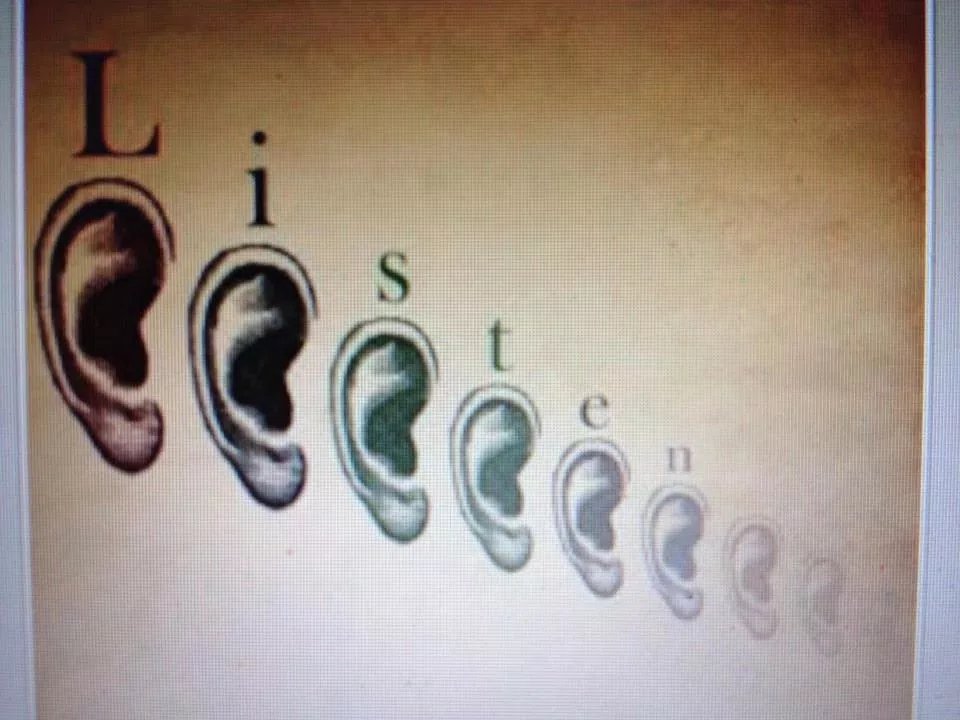
just listen
not to hear
not to reply
but to actively respond. . .
a n d
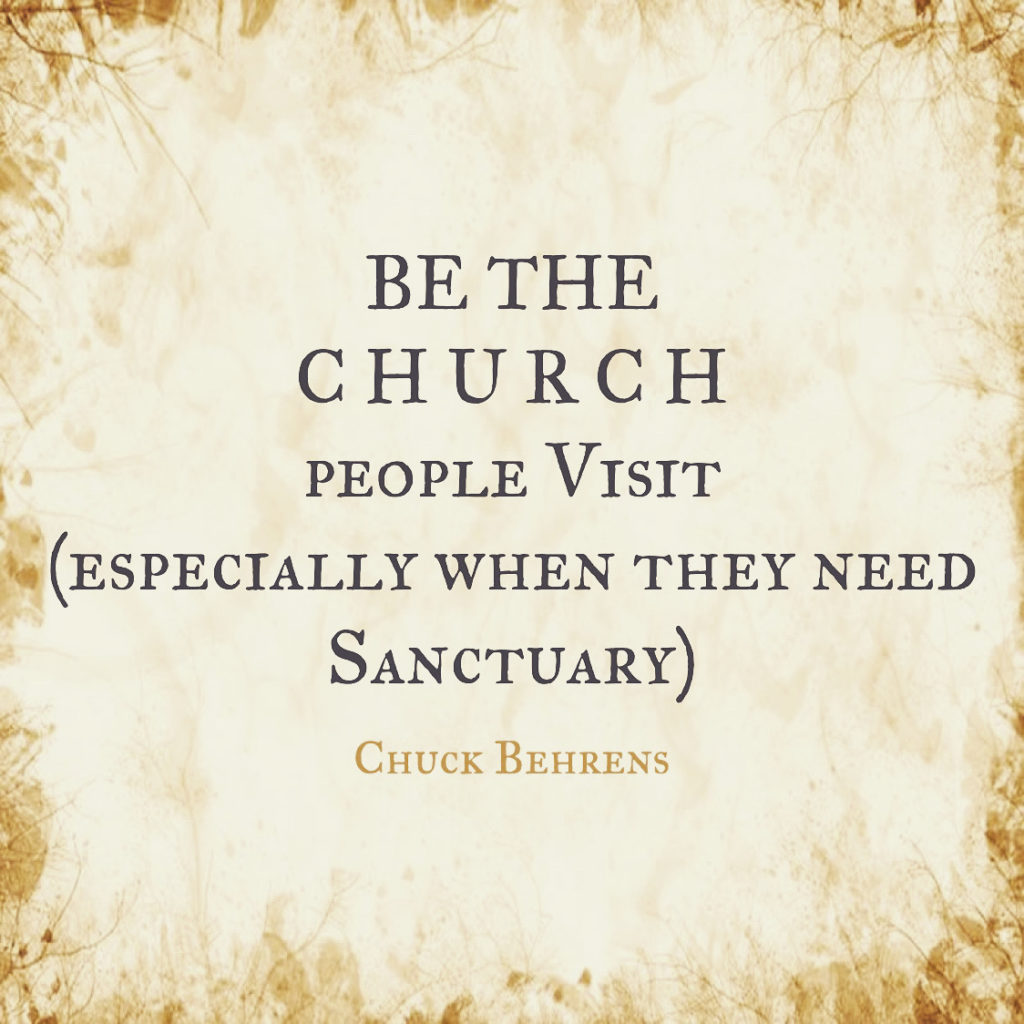
p l e a s e
Who Cares - What Matters
SOMETIMES
even the best Words
need not to be spoken or sung
but still understood
just the same. . .
P L E A S E
just listen
not to hear
not to reply
but to actively respond. . .
a n d
p l e a s e
s o m e t i m e s
the best poem is the one that
i s n ‘ t
SOMETIMES
the best poem is a
T r U t H
that goes beyond
idyllic pandemic
o r
iambic pentameter
past rhyme or reason
free verse
or some fancy syllabic haiku
Sometimes
poems forget themselves
. . .their nicely arranged words
and go directly to a
f e e l
without a touch. . .
sometimes

Physically
Emotionally
Mentally
Socially
Symphonically
Lyrically
All waysically
I am so lessically
Without you
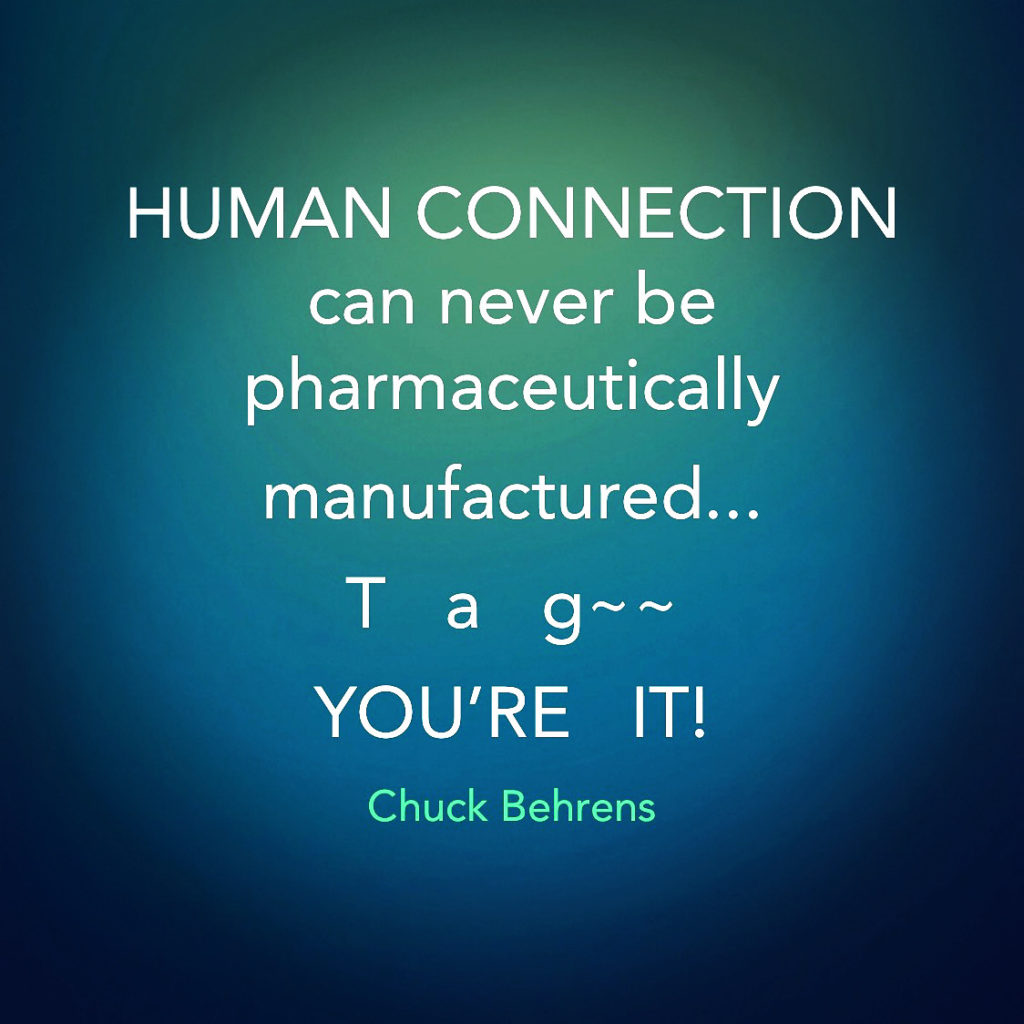
The greatest take-away from the COVID-19 Pandemic. . . ?
BE THE PROOF
of this
LESSOR LEARNED
I was never
an academic all-star;
I most likely
was a classic undiagnosed ADHD
Kid who was often classified as a
“SMART KID WHO CAN’T SEEM TO STAY FOCUSED”
during parent/teacher conference
who excelled with
anything to do with
Reading
and nothing to do with
Math. . .
Who
was often writing poetry
and putting together lyrical phrases
that I wrote in the margins of books
or large lined notebooks
that made me look like
I was ferociously
taking notes. . .
I was often motivated to do well in school
so I could play sports
and not to embarrass my
school teaching, coaching dad
and school secretary mom
. . .but it always felt
foreign
distant
and far from a home
my heart beat to reside
UNLESS
I had
THOSE
teachers
who didn’t
look to grade
penmanship
sentence structure
or what I could recite back
after nights of intense memorization. . .
THOSE TEACHERS
that wanted a piece of my mind
and a part of my heart
by inspiring me
with theirs;
who challenged me to read
WHAT WASN’T
on the syllabus
but more in my dreams;
IT
was the one thing that shaped me then
and still drives me now
T H I S
EDUCATION OF THE HEART
which you never graduate
nor receive a degree
but something far
F A R
more important:
A DEEPLY MEANINGFUL LIFE
. . .PAY ATTENTION, CLASS
The Lectures have ended
but the Teaching
is in a never-ending
S E S S I O N
and it’ll not only assure
that your heart will beat differently
IT WILL GUARANTEE
you’ll cause other hearts
to be
forever significantly better
THIS
Education of the Heart
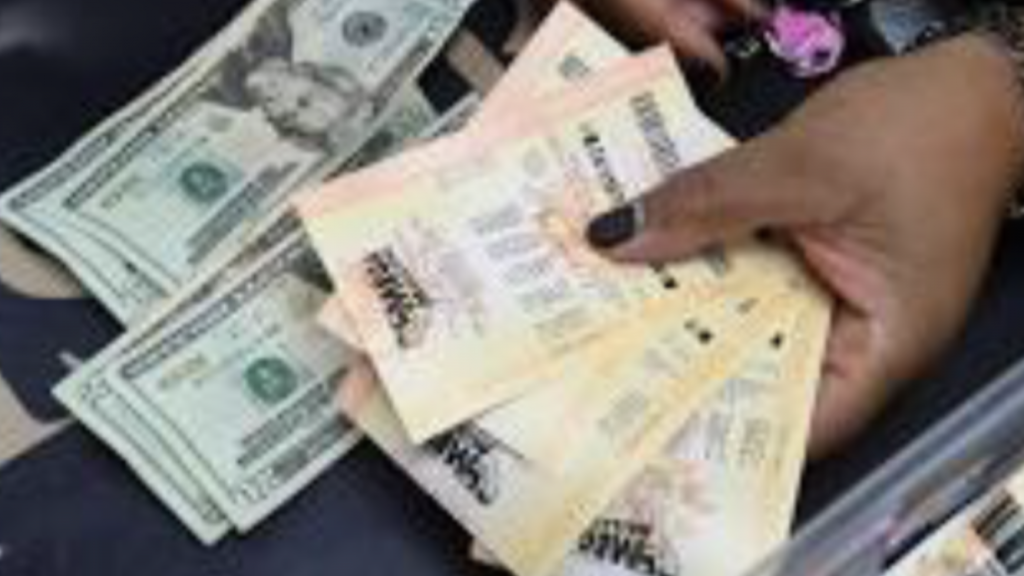
Sometimes
Winning the Lottery
has so much more than
a dollar amount. . .
Sometimes
it’s something so much more
valuable
E X P E N S I V E
P R I C E L E S S. . .
that’s what I thought
THE FIRST TIME
I saw Titus Kaphar’s painting
and then read his poem
which painted many different
i m a g e s
in the pages of my mind
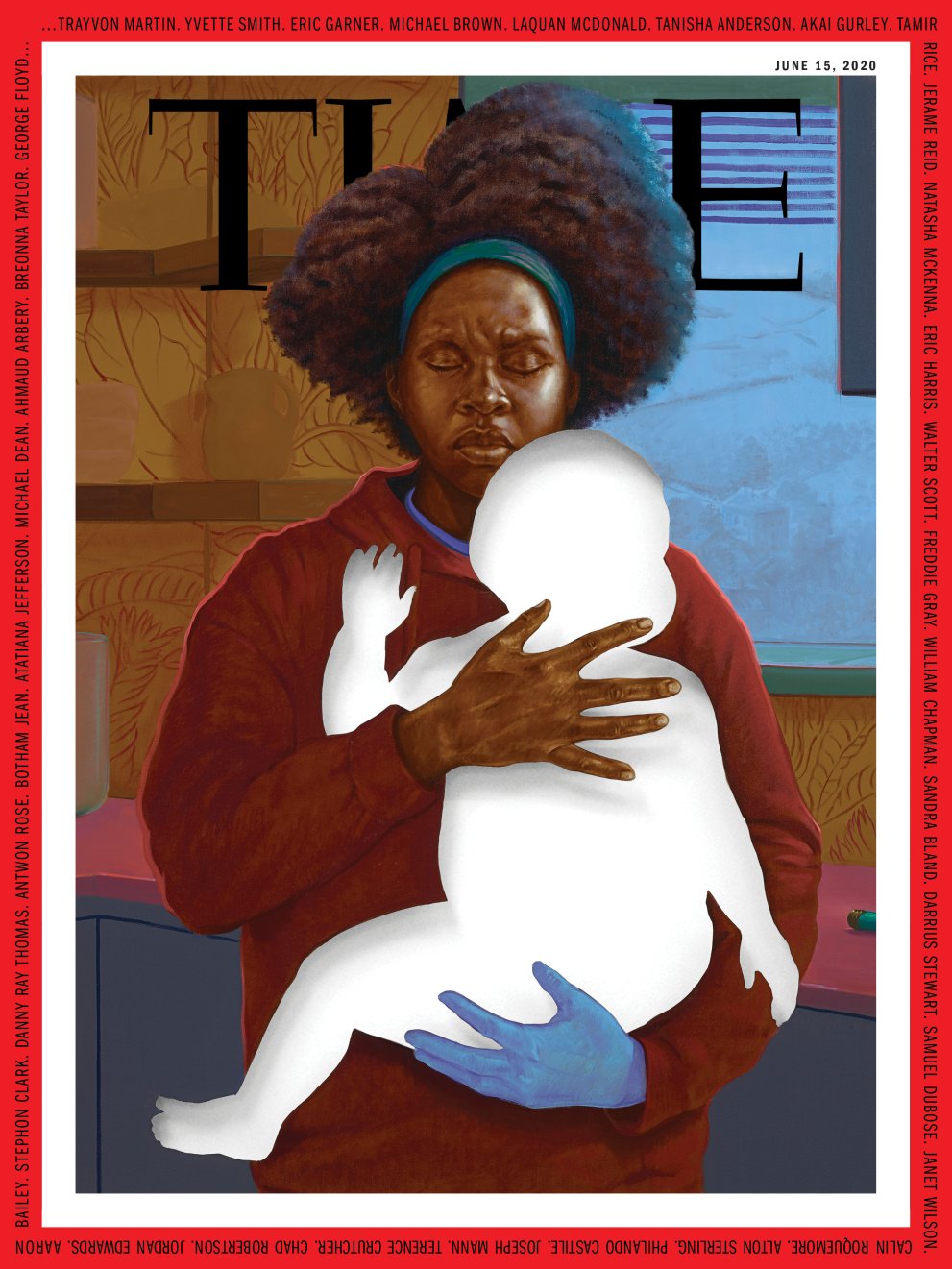 Painting by Titus Kaphar for TIMEIDEASBY TITUS KAPHAR JUNE 4, 2020 6:19 AM EDTTitus Kaphar is an American artist whose work examines the history of representation
Artist Titus Kaphar painted the portrait that appears on the cover of this week’s TIME. He has written the following piece to accompany the work which hopefully now will be a part of our work:
I
can not
sell
you
this
painting.
In her expression, I see the Black mothers who are unseen, and rendered helpless in this fury against their babies.
As I listlessly wade through another cycle of violence against Black people,
I paint a Black mother…
eyes closed,
furrowed brow,
holding the contour of her loss.
Is this what it means for us?
Are black and loss
analogous colors in America?
If Malcolm could not fix it,
if Martin could not fix it,
if Michael,
Sandra,
Trayvon,
Tamir,
Breonna and
Now George Floyd…
can be murdered
and nothing changes…
wouldn’t it be foolish to remain hopeful?
Must I accept that this is what it means to be Black
in America?
Do
not
ask
me
to be
hopeful.
I have given up trying to describe the feeling of knowing that I can not be safe in the country of my birth…
How do I explain to my children that the very system set up to protect others could be a threat to our existence?
How do I shield them from the psychological impact of knowing that for the rest of our lives we will likely be seen as a threat,
and for that
We may die?
A MacArthur won’t protect you .
A Yale degree won’t protect you .
Your well-spoken plea will not change hundreds of years of institutionalized hate.
You will never be as eloquent as Baldwin,
you will never be as kind as King…
So,
isn’t it only reasonable to believe that there will be no
change
soon?
And so those without hope…
Burn.
This Black mother understands the fire.
Black mothers
understand despair.
I can change NOTHING in this world,
but in paint,
I can realize her….
This brings me solace…
not hope,
but solace.
She walks me through the flames of rage.
My Black mother rescues me yet again.
I want to be sure that she is seen.
I want to be certain that her story is told.
And so,
this time
America must hear her voice.
This time
America must believe her.
One
Black
mother’s
loss
WILL
be
memorialized.
This time
I will not let her go.
I
can not
sell
you
this
painting.
and then. . .
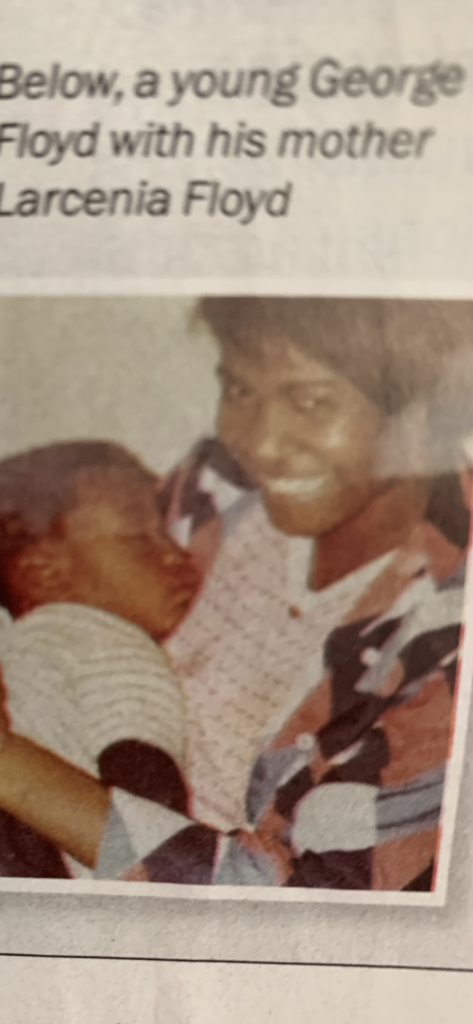
I saw this little thumbnail picture
way down in the right hand corner of
Titus’s poem
and these words spilled out of me
from heart
through my eyes
down my cheeks
onto a crumbled piece of discarded paper
that missed the garbage can
from short range:
Why
NOW
am I always on the
Verge of Tears
With a movie clip
Or just the mention of it
A poem
Or just a well spoken phrase
A song
With or without lyrics
A scene
A smell
A glance
A touch
A sound
An indescribable feeling
And then
THERE
A flow of tears
No lash can hold back
Or no longer Dam
Flows a liquid saltiness
That can’t be
Diluted
But can only
Water
Nourish
What’s waited to grow
But never been fully planted
Or hardly nurtured
But now no longer
Ignored
I’m always on the verge of tears
Now
F I N A L L Y
(And hopefully for an ever)
Lump in the throat
Unswallowable
that never chokes
but makes the breath
in and out
different

Sometimes
Winning the Lottery
has so much more than
a dollar amount. . .
Sometimes
it’s something so much more
valuable
E X P E N S I V E
P R I C E L E S S. . .
Mr Kaphar
can’t sell me his painting
not because
he’s holding out
so much as us
HOLDING ON
(to all of the wrong things)
This recently popped up on my YouTube channel from the PIANO GUYS
and as often the case:
NO WORDS NECESSARY. . .
not that
THAT
has ever stopped me
. . .in fact,
it usually inspires more words
(from the producers):
Behind every song is a story. Some superficial or spontaneous. Some deep and more meaningful, even life-altering. Music plays so many roles in our lives. On the surface it is entertainment, but that grossly underestimates its depth. It can be a messenger — have you ever had just the right song played at just the right time, sending you just the right message? It can be a pathway to a change or step forward we need to make in life. Sometimes it can be an angelically-aided connector of people. Well, in this story, music was all this and more. A simple social media post that shared a tourist’s video of an extraordinarily talented puppeteer, Márton Harkel, who performs as a busker on the streets of Budapest. What caught the eye was his cellist puppet. It was a near-perfect copy of the puppeteer. And as he made the motions of playing cello, his puppet would mimic his movements with astounding musicality. It was captivating. It was like watching art come alive. And so there was this magnificent pairing of his puppet design and marionette skills with the arrangement of the Mussorgsky’s “Promenade” theme from “Pictures at an Exhibition” — the prominent piece among a suite of classical works written about art coming alive! And the timing of it couldn’t have been better — as it’s releasing during a time when we can’t film traditional music videos due to the current pandemic’s safety measures. So this is a pandemic approved, proxy puppet’s performance of Pictures at an Exhibition! Please take some time to listen to the original suite here: https://www.youtube.com/watch?v=TAHX0… (The theme chosen is right at the beginning and throughout the piece — it is the melody Mussorgsky wrote to depict us walking from painting to painting) Márton worked for over 200 hours to handcraft these puppets so that their articulating fingers, and a multitude of hinges and joints could be “in concert” with the music. Notice the care he takes to see that they are doing their best to even play the right notes. The best part of this story? After Márton finished creating the puppets and prepared to film, he realized he couldn’t make them come alive alone. He needed another puppeteer. He hired Napsugár Trömböczky, a lovely and talented young lady. As they began working together, their interest in the project and the puppets took a back seat to their interest in each other! In ONE WEEK they were engaged. They say it’s crazy. We say it’s destiny. Márton and Napsugár’s love story that’s truly touching. We pray before we write our music with the desire that it will somehow spread hope. All of us all spend a great deal of our lives waiting for something or someone we’re hoping for. Stories such as this can perhaps provide some evidence that a life can change and hopes can be realized in the matter of one song. One week. One idea. That gives us hope that when things aren’t lining up or we’re far from where we had hoped to be, the alignment that we seek can come together in a mere moment — in a way we could have never anticipated. Now, we don’t believe that we, as humans, are puppets of Destiny. But perhaps there is a “Grand Puppeteer,” who loves us and who knows us better than we know ourselves — and He pulls destiny’s strings on our behalf. Márton, in his message to us after he finished the video, humbly and graciously expressed gratitude for the project, but more than the project, for the opportunity to meet his soulmate, and to do what he loves, with whom he loves. Who dare take any credit?Look to the Grand Puppeteer for that. But we thank you, Márton and Napsugár, all the same. If all the time, work, energy, and passion that went into this project was all for you two and your eternal family, then it was well worth it. This is just a small honor to have the opportunity to “play a small part” in something much more important than a music video. After all, we are just a mere puppet(eer)
Pay Attention, Class. . .
The Music
The Action
only continues on
(in each of us)
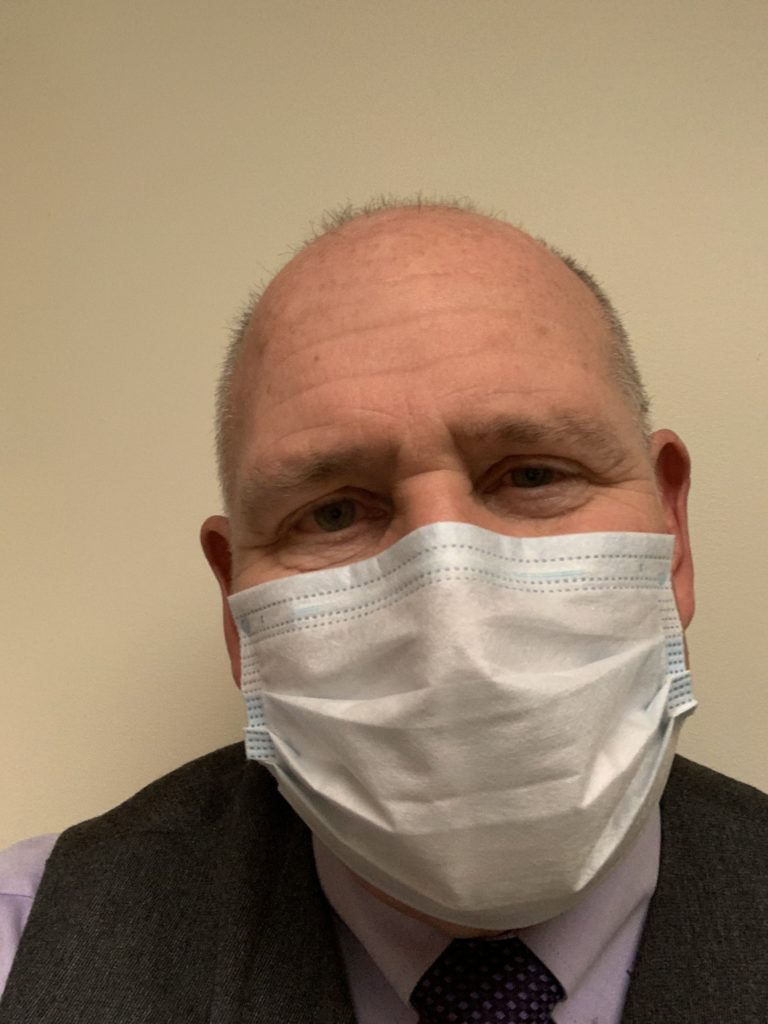
I have said for a long time now
the only day we celebrate 365 days a year
or for that matter;
E N D L E S S L Y
is Halloween
and now for the past few months
(literally and figuratively)
it feels worse than
Halloween gone
Bill Murray’s GROUNDHOG’S DAY
which makes us all begin to
wonder:
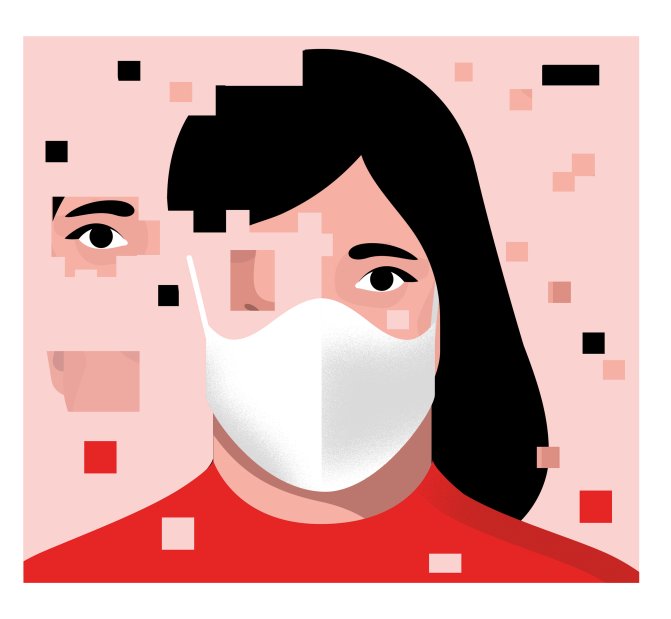 Illustration by Nathalie Lees for TIMEIDEASBY; It seems that we may not be the only ones
W O N D E R I N G
BELINDA LUSCOMBE is an editor-at-large at TIME and the author of Marriageology: The Art and Science of Staying Together has pondered a few of these thoughts as well. . .
Miss Belinda shares, “I miss smiling. I don’t miss it in the inspirational poster “the whole world smiles with me” way. I don’t miss it, as another poster says, because I can no longer “intimidate those who wish to destroy me.” I don’t miss it because “happiness looks gorgeous on me,” although I did put in three very formative years of hard time in the orthodontia trenches–20 months of braces and six retainers–so it looks at least marginally better than it used to. . . .”
I miss smiling because it’s one of the handiest utensils in the communication drawer and my mask has locked it away. Yes, it’s just a facial expression: a deployment of the zygomaticus muscles, sometimes authentic, sometimes a placeholder because the real emotion we’re feeling is best not expressed. But as humans, we learn at the age of approximately 42 days that smiling is a useful way of getting people to feel good about themselves and therefore us. (The “world smiles with you” thing actually works–for babies.)
We continue to refine the way we use that smile to communicate information–from “you’re here!” to “you’re cute” to “you’re not meant to take that seriously, although you also kind of are”–until we no longer have teeth. And now, suddenly, those skills, all that practice, are useless. We have lost our favorite communication gizmo just when we need more ways to connect than ever.
Trying to interact with other humans without being able to smile is the facial equivalent of communicating via text message; it’s easy to be misunderstood. Your expression and words lack context. People wonder: Are you wincing at me? Are you grinding your jaw? Do you just have a lot of crow’s-feet? Was what you said an insult or a joke?
According to Paula Niedenthal, a psychologist who heads up the Niedenthal Emotions Lab at the University of Wisconsin–Madison and has studied facial expression extensively, there are three types of smiles: those that express pleasure at a reward or surprise, like when you get to see your friends in person after a prolonged separation (soon, please); those that convey a desire to be friendly, or at least non-threatening, which she calls smiles of affiliation; and those that show dominance, like the one Dirty Harry gives when he asks a certain punk if he feels lucky.
Her studies have shown that it’s harder to tell the difference between affiliative smiles and dominant ones if you can’t see the lower half of the face. In those situations, people have to rely on other clues. She gives the example of walking a dog that suddenly barks at a passerby. A quick look at an unmasked person’s face will confirm whether the passerby is smiling because he thinks he’s much better with his dog than you are or smiling because his dog is also occasionally silly. Behind a mask, this distinction is not so clear.
Niedenthal predicts that as mask use stretches on, people may rely more on the context of the situation to tell them how to interpret an interaction. “They will imagine that the context confers a reaction that is obvious, which of course will get everybody into a lot of trouble, because people in our culture respond with high variability to the same context,” she says.
BUT I have tried to compensate
for the communication gap by enhancing my other gestures. Upon approaching strangers in the street, I want to let them know that I am harmless and wish them well. In hard times, this message feels particularly urgent. Not being able to smile at them has forced me to wave or do a weird fighter-pilot-style salute. If I’m pulling aside to let them pass and can no longer offer an encouraging “you first” smile, I am reduced to airport-marshal gesticulations, which are about as effective as talking more loudly to someone whose language you don’t speak.
But it’s not just the recipient who gains from a grin. Smiling affects the smiler too. Studies have shown that it enhances the mood that produced the expression and helps us recall happier times. “Facial expression is not just out-put from the brain but also feeds back to the brain and has some consequences for subjective experience,” says Niedenthal. “There is good evidence that smiling naturally has some effect on your ambient emotional state.” In other words, masks may be making us more morose.
It almost never helps a situation to tell people to smile, so I won’t, but I’m going to keep beaming, even if it can’t be seen and sometimes is not entirely authentic. A fake smile, after all, is often given with good intentions, just as a mask is sometimes worn not to hide but to protect.
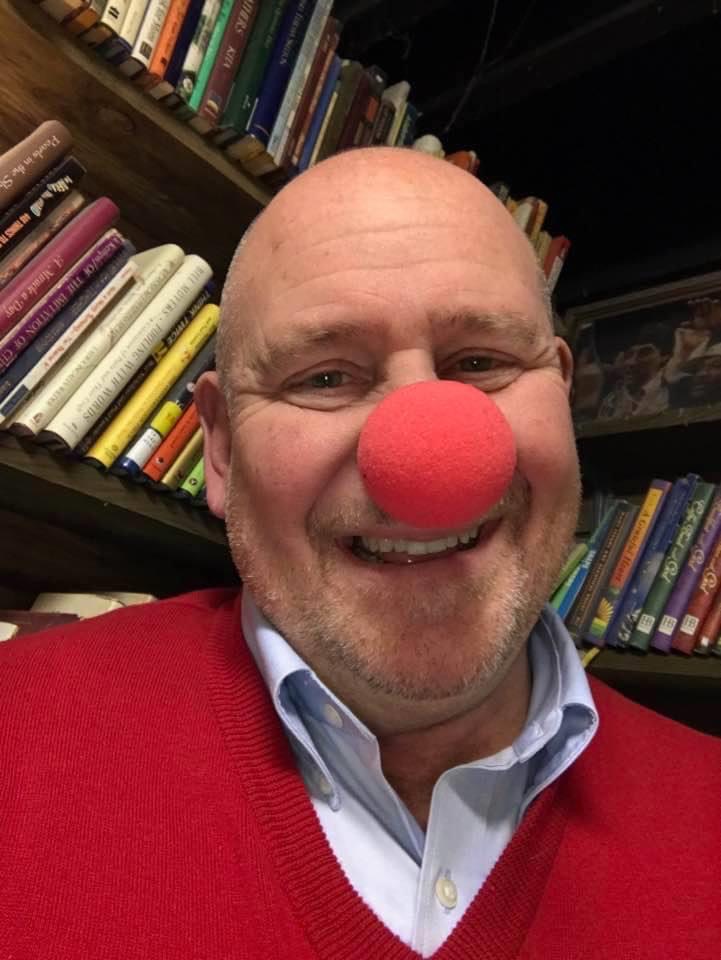
And then there’s
Steve Wilson and The World Laughter Tour. . .
when I went to his two day workshop a few years ago
and became a Certified Laughter Leader
I still remember
one powerful lesson
that even a fake laugh
is a beneficial laugh;
a FAKE SMILE
still,
physiologically
is immensely beneficial
by relieving stress and enhancing
a calm, creative, good mood. . .
So here’s the deal:
(ESPECIALLY)
BEHIND THE MASK
the best way to assure a smile
IS TO
(CREATE)
GIVE ONE
I shared this over three years ago under much different circumstances;
C I R C U M S T A N C E S
that could have never have been imagined
and far from understood
C I R C U M A T A N C E S
that still
even at our most current moment
are difficult to imagine
and feel far from being understood. . .

B U T
Maybe there’s another
a different way
of seeing
I T :
There is sowing your oats
and then there is serving them,
eating them
and digesting
all the goodness
that can’t begin to fit on a spoon,
in a bowl
or even on a cafeteria tray
or a table. . .
EAT UP!
and make a NOTE
of BEING
THE GOOD YOU MAKE
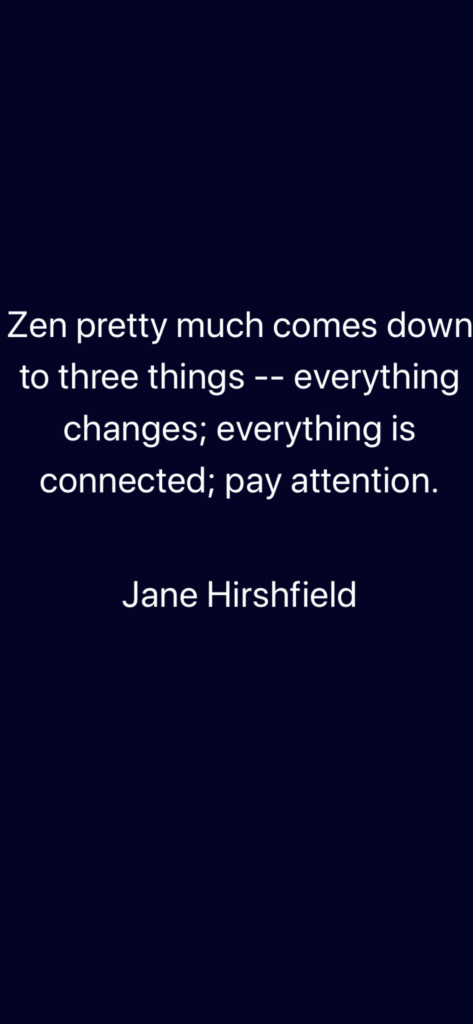
WHEN I READ THAT
I WROTE THIS:
Not everything that grows comes from the field or the ground
Not everything that soars flies in the sky
Not everything that nourishes comes from a plate or the end of a fork
Not everything that saturates is wet
Not everything that is read comes from a book
Not everything that is believed is known
Not everything that has felt can be touched
Not everything that was, is
Not everything is any one thing
Not everything is every thing
WHICH MADE ME THINK:
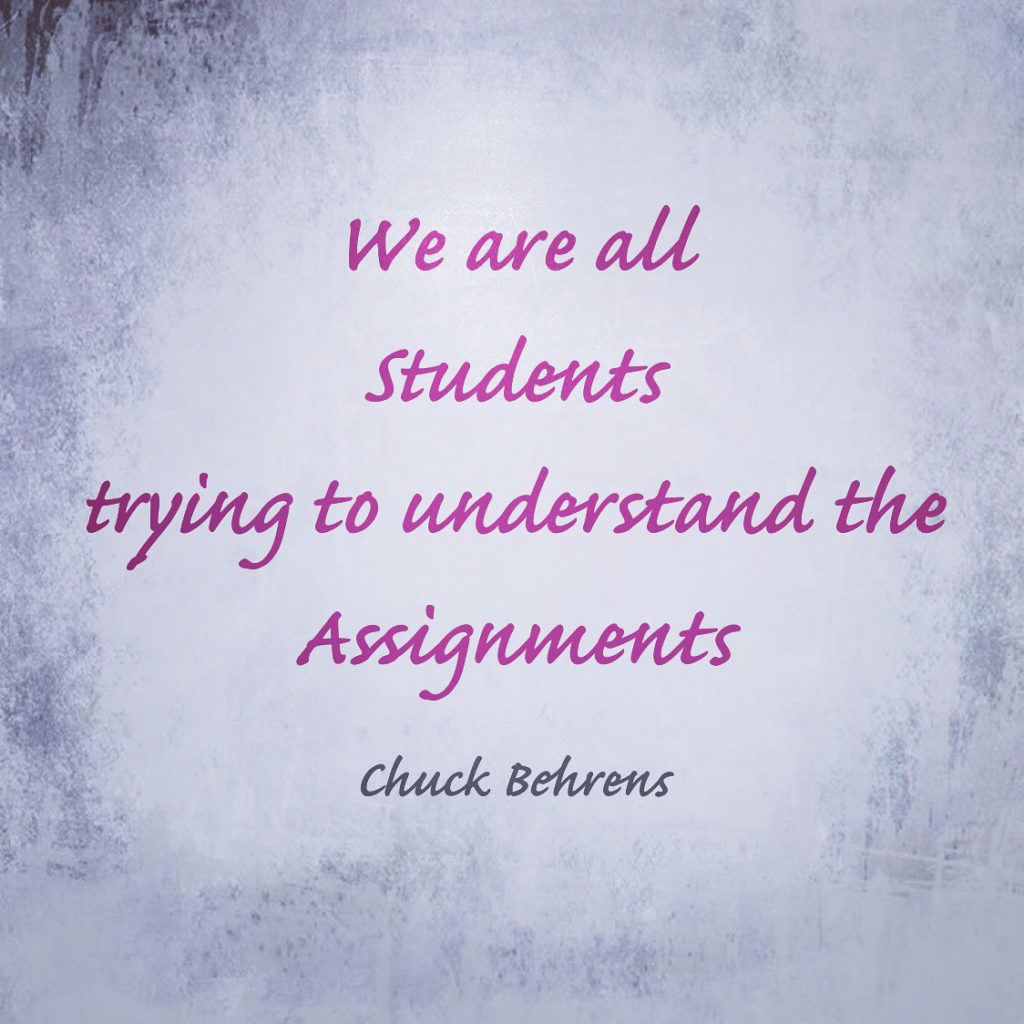
AND MADE ME FEEL

Like I’ve always been paddling towards the
END OF THE WORLD
only to find a
U N I V E R S E
of new
E V E R Y T H I N G S
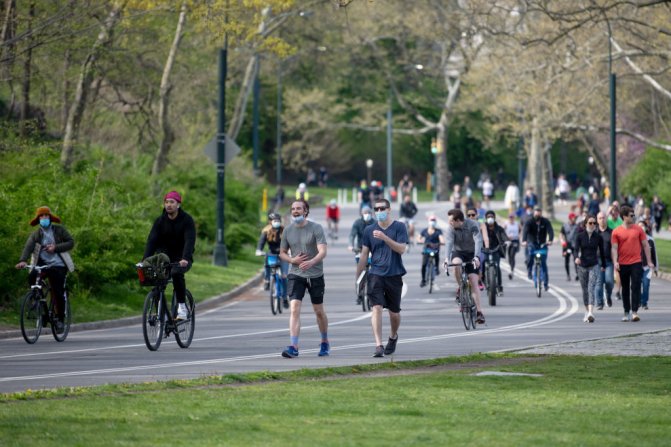 People with and without masks in New York City’s Central Park on April 25, 2020. Getty Images—2020 Alexi RosenfeldBY JAMIE DUCHARME a journalist from TIME Magazine brought us an interesting question that we might all have to do a double-take on before answering it. . .
DO YOU HAVE CAUTION FATIGUE?
Even as the
“OPENING UP”
is now beginning to take place;
it’s still painstakingly
S L O W
As these ever-so-slow
lockdowns drag on and on in many U.S. states,
there are worrying signs
that people’s resolve to continue social distancing
is flagging. . .
An illicit house party in Chicago made headlines this week, as did photos of crowded beaches in Southern California and packed parks in New York City. Anonymized cell-phone data tracked by the University of Maryland also shows more and more people are making non-work-related trips outside as quarantines drag on, and a TIME data analysis found that some states are experiencing new surges in coronavirus cases after initial declines.
Jacqueline Gollan, an associate professor of psychiatry and behavioral sciences at the Northwestern University Feinberg School of Medicine, has coined a name for this phenomenon based on her 15 years of research into depression, anxiety and decision-making: “caution fatigue.”
Gollan likens social-distancing motivation to a battery. When lockdowns were first announced, many people were charged with energy and desire to flatten the curve. Now, many weeks in, the prolonged cocktail of stress, anxiety, isolation and disrupted routines has left many people feeling drained. As motivation dips, people are growing more lax about social-distancing guidelines—and potentially putting themselves and others in harm’s way, Gollan says.
Even as some states begin the process of reopening, it’s crucial that people continue to follow local social-distancing guidelines to avoid back-sliding. To help, use Gollan’s tips for fighting caution fatigue.
You’ve heard all these tips before, but they bear repeating: get enough sleep, follow a balanced diet, exercise regularly, don’t drink too much, stay socially connected and find ways to relieve stress. “If people can address the reasons for the caution fatigue, the caution fatigue itself will improve,” Gollan says.
Gollan also says it’s important to improve your “emotional fitness.” She recommends expressing gratitude, either to others or yourself; setting goals for how you want to feel or act; and taking time just to decompress and laugh.
As important as they are, goals like flattening the curve and improving public health can be hard to stay fired up about since they’re somewhat abstract, Gollan acknowledges. So it can be useful to think about how your behavior directly affects your chances of getting sick, and thus your chances of spreading the virus to people around you.
People tend to overvalue what’s already happened, assuming if they haven’t gotten sick yet they won’t in the future. “But if your behavior changes and you have a gradual decline in your safety behaviors, then the risk may increase over time,” Gollan says. Remembering that reality can prevent you from falling into “thinking traps” like convincing yourself another trip to the grocery store is absolutely necessary, when it’s really just out of boredom, Gollan says.
Coronavirus has probably shattered your regular daily routine—but you can still make time for things you valued before the pandemic, like exercise and socializing. Creating a new normal, to the extent possible, can be stabilizing, Gollan says.
Focusing on small pieces of your new routine can also be a helpful way to grapple with uncertainty. If it’s hard for you to think about how long quarantine may stretch on, instead focus on the immediate future. “What are you going to do this morning?” Gollan says. “Are there things you’re not doing that you should?”
It may help to remember that social-distancing is really about the common good. In keeping yourself safe, you’re also improving public health, ensuring that hospitals can meet demand and quite possibly saving lives. “There’s something powerful about hope, compassion, caring for others, altruism,” Gollan says. “Those values can help people battle caution fatigue.”
Just like anything, selfless behavior gets easier the more you do it, Gollan says. “Try small chunks of it,” she suggests. “What can you do in the next hour, or today, that’s going to be a selfless act to others?” Donating to charity or checking in on a loved one are easy places to start.
Just as you may learn to tune out the sounds outside your window, “we get desensitized to the warnings [about coronavirus],” Gollan says. “That’s the brain adjusting normally to stimulation.” Even something as simple as checking a credible news source you don’t usually follow, or catching up on headlines from another part of the country, could help your brain reset, she says. . .

What I have found utterly amazing about
THIS TIME
is no matter how many times it feels that everything is
so devastatingly
D O N E
there’s still this awesome growth
that’s sprouting up all around us
A NEWNESS
that couldn’t come from any other
WAY
or PLACE
except this soil of
scary
sacred
sorrow
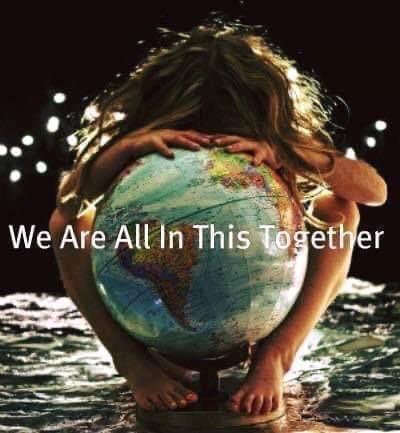
It’s more than a rally cry
It’s more than a hope
It’s more than a wish
It’s more than a prayer
It’s more than a promise
It’s been a fateful fact. . .
The WE of it
The ARE of it
The ALL of it
The IN of it
The THIS of it
The TOGETHER OF IT
has never interwoven
THE US OF IT
into a never known
T A P E S T R Y
of it
like this before. . .
So here’s the biggest question
that hopefully has an even bigger answer:
WILL THIS CAUTION FATIGUE CAUSE US TO BE MORE COMPASSIONATE OR MORE COLD-HEARTED. . . ?
Careful. . .

How you live
(from here on)
will scream for generations
who will never forget
what you will never have to say
but will always be heard. . .
R E M E M B E R
(now more than ever)
We are way beyond the
SURREAL
aren’t we. . . ?
For the last 7 weeks we have had it put upon us to do
The New,
N E W
and it’s done everything it can
to not just cripple us
but destroy us
by merely
SOCIALLY DISTANCING US. . .
Have you ever felt like you are just coasting through life and missing out on becoming the person you were destined to be
especially now in this
UN-Normal, NORMAL?
Or have you felt like you’re trying your hardest to live up to your greatest potential — to make a difference – to live out those dreams in your heart that seems now to forever be beating differently. . . ?
But something keeps getting in your way
Holding you back
Road blocking you. . .
This can be
DE- Couraging. . .
Somewhere along the way we might lose sight and motivation to pursue what really makes us happy. . .
we’re lighting our Candle
only to have it immediately
s n u f f e d
We might resign ourselves to being okay with just getting by in life
And worst
accepting that some people
get to live their dreams
as we get robbed of our
V I S I O N
Sometimes the weight of our daily lives can deter us
from taking the first step towards manifesting our heart’s desires
Towards living a life of abundance.
And towards truly living up to our greatest potential. . .
While that might sound pretty heavy – today’s video
isn’t. . .
I saw it years ago
but the perspective has all changed
and so has my
V I S I O N
I’ve lived them on this journey in being of service to you. Following our dreams doesn’t come easy. It comes with the price of hardship and challenge. . .
Fortunately, in just 380 seconds of this video you can learn what each and every truly successful person has done to elevate themselves from the hardships up to living their dreams. 🙂
Now here’s a tough question…
When you look in the mirror, what do you see?
The way we look at ourselves also reflects how we interpret life. The way we think about ourselves shapes how we respond to life.
No matter where we begin, the next step in our journey of living our dreams starts inside each and every one of us.
And what keeps us going when times get hard and it seems like our heart’s dreams are merely that. . .
just dreams?
W H Y
Dream only when you sleep
. . .If you’re only dreaming when you’re asleep
you’ll never have vision;
BE THE PRIMARY PROOF
of it. . .